
The Backpack Ban
by Dingyi Ling ‘28
The Rule
The central corridor of the main building connects classrooms, admissions, and administration. Every student walks it daily. Every family of future St. Markers tours it.
Last fall, the administration banned students from leaving their backpacks there.
Students must now leave their bags in designated zones, approximately 25 feet away, in either direction. The hallway is cleaner. The designated areas are not being used; bags are piling up, and students are taking longer to retrieve them. Especially after seated meals, the hallway has never been as crowded.
Students were told two things: backpacks hurt the school’s image and obstruct access for individuals with disabilities, as sourced from the School Meeting announcement. It was not until this week, three months later, that the fuller picture emerged. The policy is tied to fire code compliance and ALICE safety protocols. The school is required to keep corridors accessible for emergencies.
Though the fire code explains the rush behind the rule’s establishment, students were not given a proper explanation for all this time. Students, including the monitors who bridge the gap between students and the administration, do not have an opportunity to express their opinions.
The Data
Does the student body agree with the school's perceived reasoning?
The St. Marker surveyed 101 students (27.2 % of the student body) to gain deeper insight into their opinions on the policy. The questions are centered on their acceptability and views on the rule’s necessity: What are your thoughts on the policy? Do backpacks in the hallways affect the school's image? Is the hallway difficult to access with backpacks present? The survey was sent before the student body was informed of the fire code and ALICE protocols. Each response below reflects what three months without a sufficient explanation yields.
The survey does not include administrators, faculty, or disabled students — those voices will be the focus of a follow-up report, beginning with an interview with Dr. Robert Fish in the next issue.
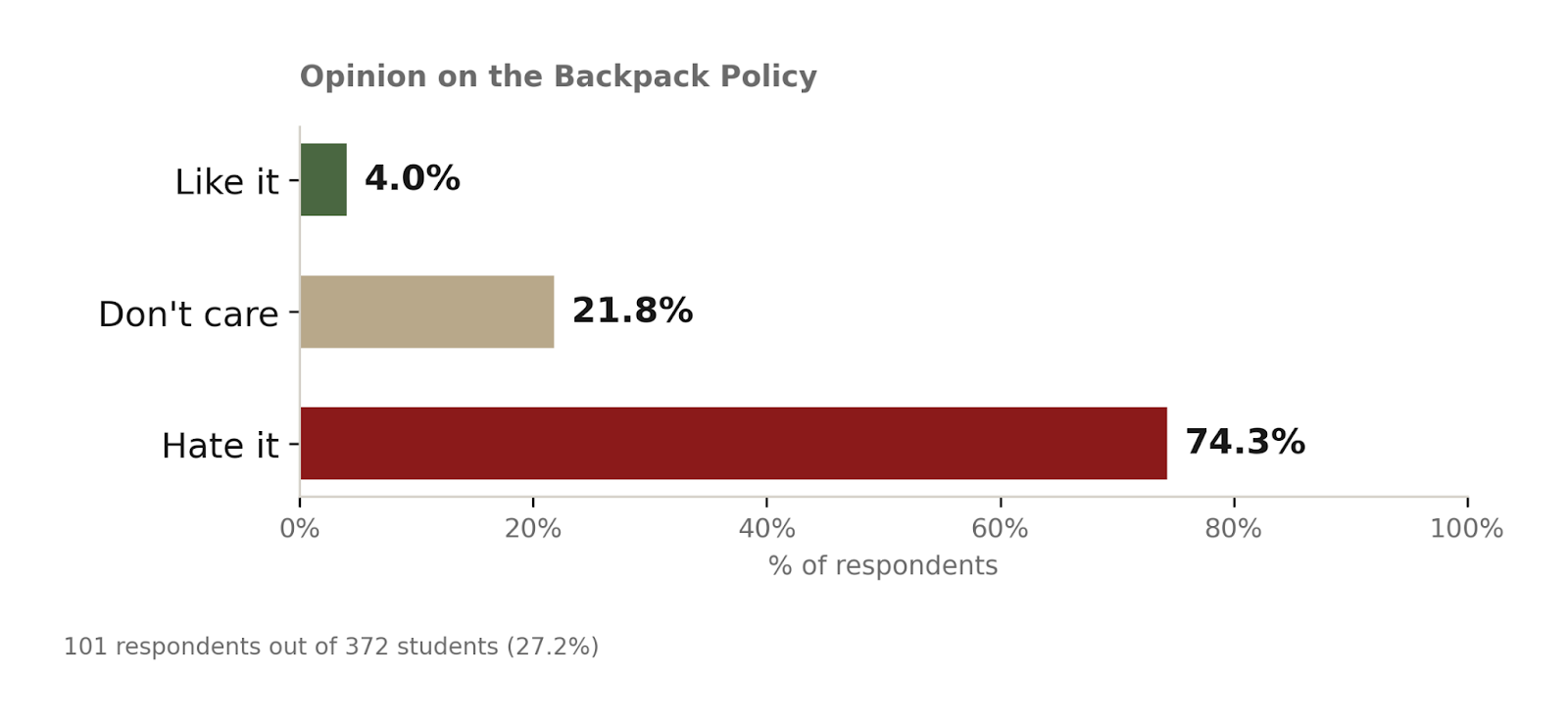
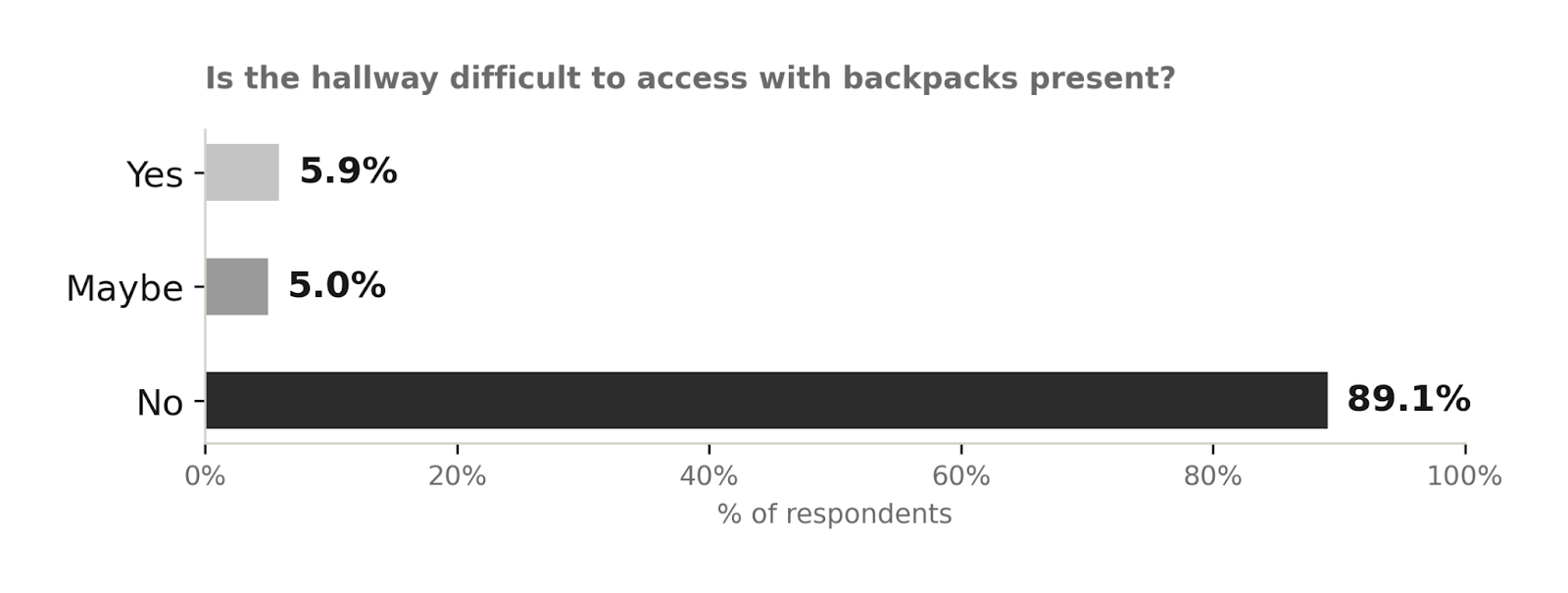
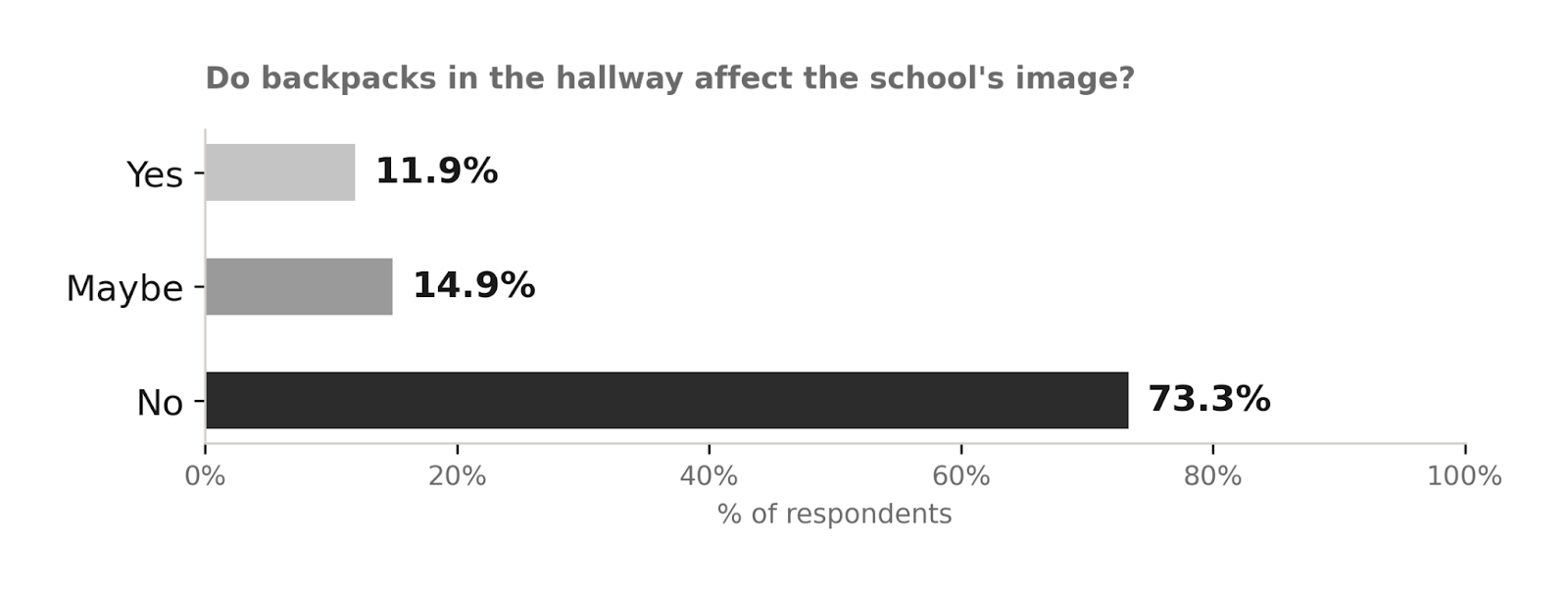
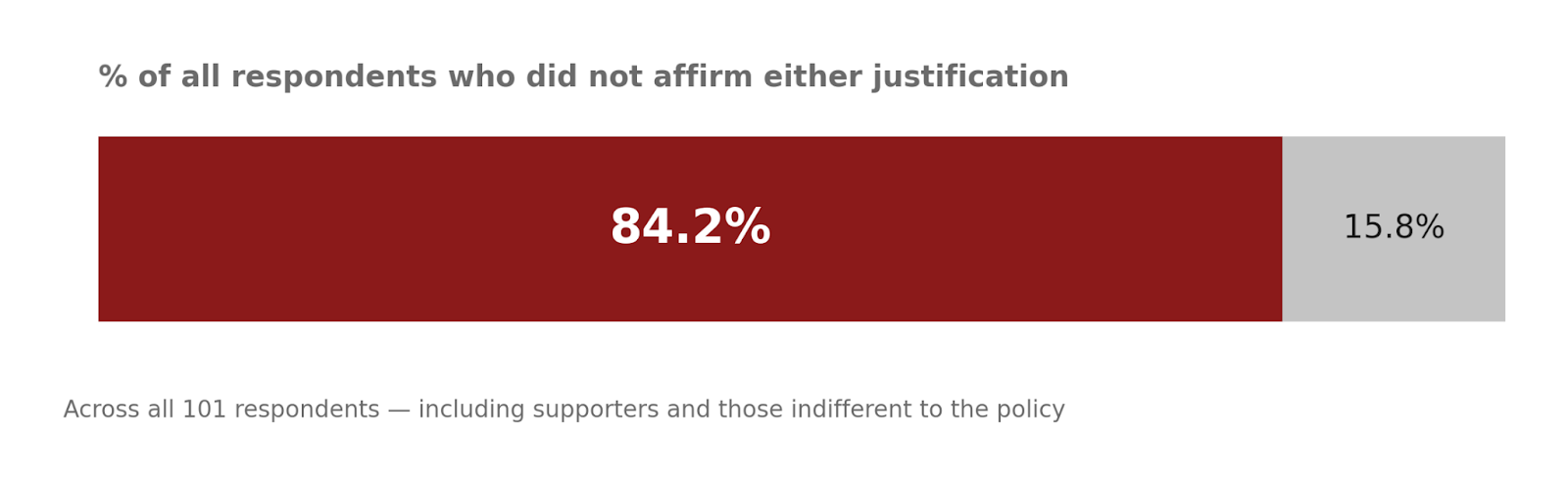
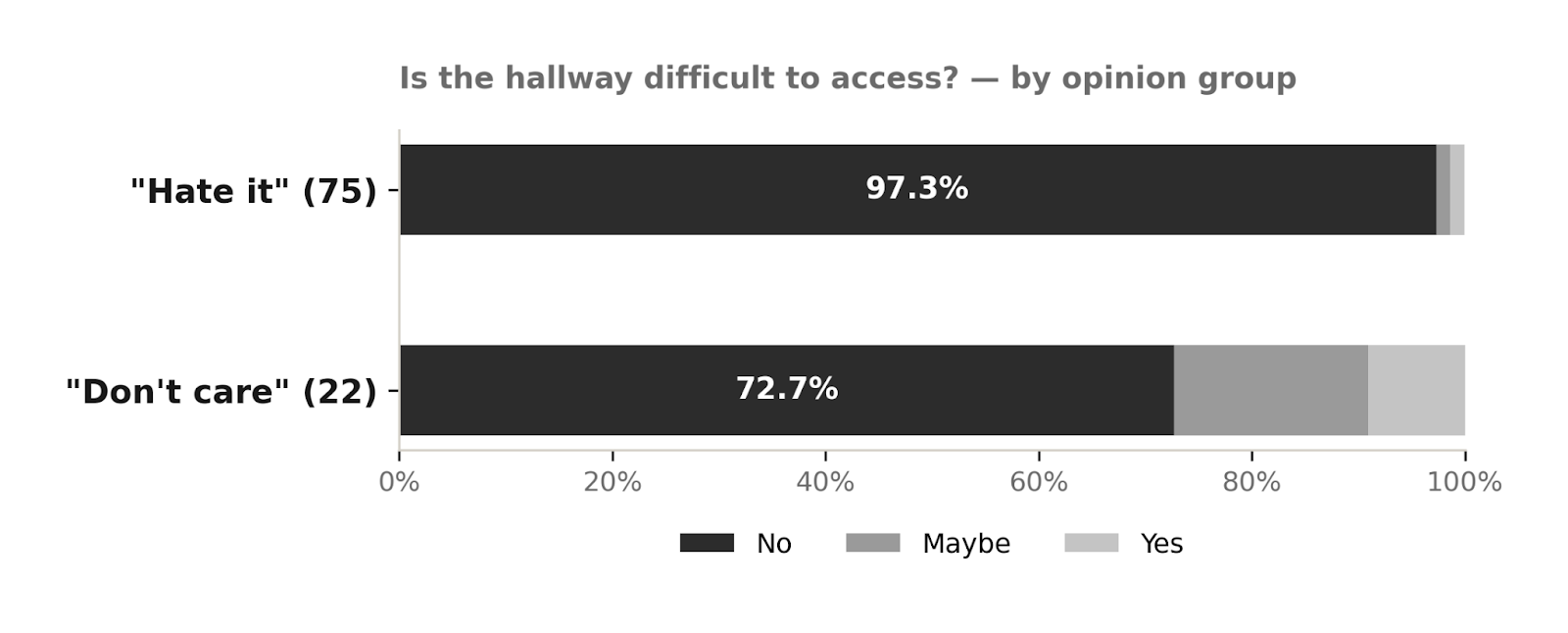
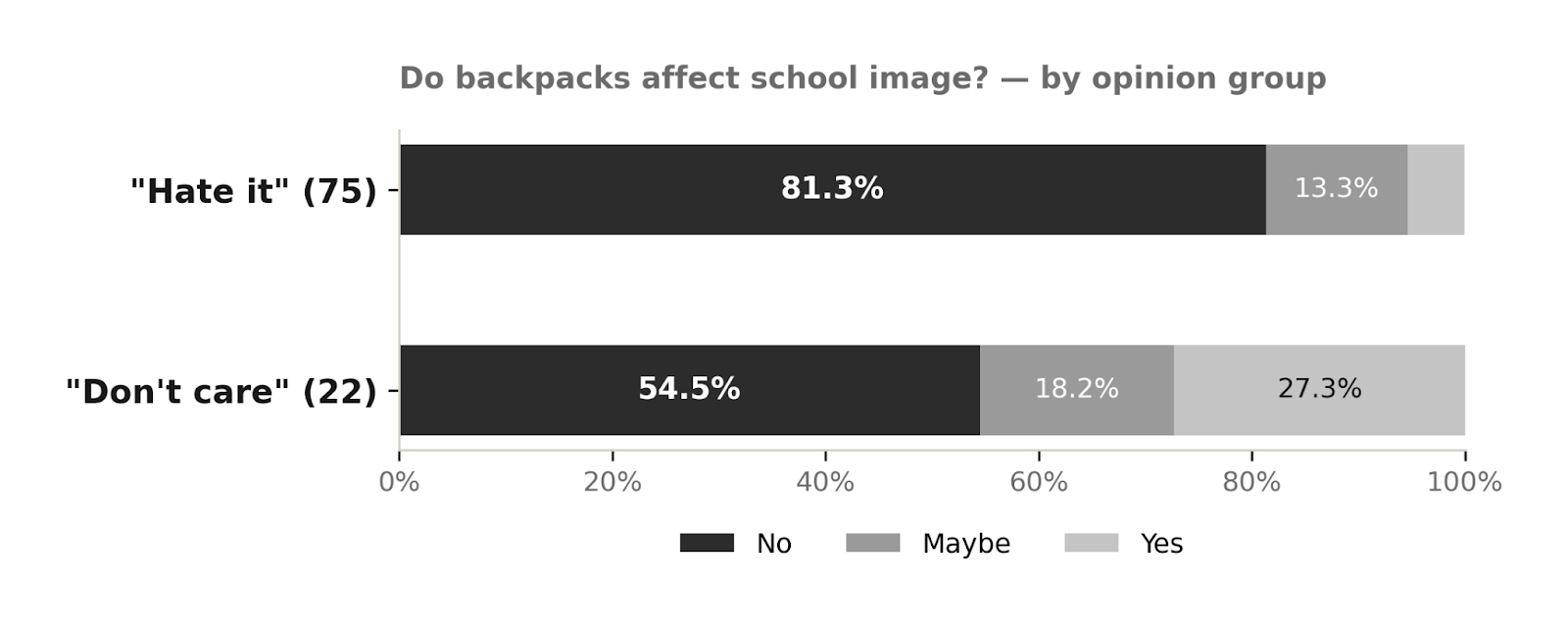
As shown in the graphs, 74.3% of students dislike the policy. Furthermore, the majority of the sample disagreed with the school’s rationale for installing the regulation, where 84.2% of all respondents did not approve of either reason.
A further cross-tabulation based on the three opinion groups (“Hate it”, “don’t care”, “like it”) is conducted for the following two questions.
*"Like it" group (4 students) is omitted — sample too small for meaningful comparison.
Among the 75 students who oppose the policy, more than 80% oppose both rationales.
The more telling demographic is the "Don't care" group. Since these 22 students have no objection to the policy, they have no reason to reject its reasoning out of frustration. Yet more than half say the backpacks make the hallway hard to access, and 72.7% disagreed that backpacks affect school image. The results imply that with nothing at stake, students still do not accept an incomplete explanation for exclusion.
This data does not dismiss the accessibility concern, as the survey cannot capture the experience of disabled individuals navigating this hallway. What it documents is simpler: when teenagers are asked to accept an inconvenience without the complete picture, the result is rarely cooperation, but resistance. These numbers reflect the predictable outcome of a communication gap.
The Argument
If the administration led with the fire code, the controversy would likely have ended before it began. Instead, students were given two justifications that did not align with their daily experience, and three months of silence in between.
Students were given two justifications: image and accessibility. The data shows the majority did not find either convincing. With fire code now the stated reason, the question is not whether those justifications were wrong — it is why they were the only ones students heard for three months.
The deeper issue is straightforward. When teenagers are asked to accept an inconvenience without a sufficient explanation, the result is frustration. The fire code would have been a sufficient explanation for most students and would have encouraged more students to follow the policy.
The safety code mandates the backpack policy, and the initial decision had to be made quickly. But three months have passed. During that time, students could have been asked to suggest ways to improve the policy. St. Mark's is a boarding school. Most students do not leave at the end of the day — they live here. Every rule shapes a daily life, not a work shift. That should matter — not in whether the rule exists, but in how it is carried out.
What Comes Next
Beginning with the next issue, The St. Marker will cover school policy as part of its regular reporting. A follow-up article on an interview with Dr. Fish on the backpack policy, including the fire code requirements and the reason behind the inadequate communication with students, will be featured.
Going forward, this publication will interview administrators and policymakers to report the reasoning behind decisions to the student body. The goal is a channel that does not currently exist — one where students learn why decisions are made, not just what they are.
Though the backpack policy is small, it reveals the lack of transparency behind it. This is our St. Mark's — every St. Marker deserves to understand how it is run.
