
Prize Day Issue
May 15 2026

Introducing New Teachers
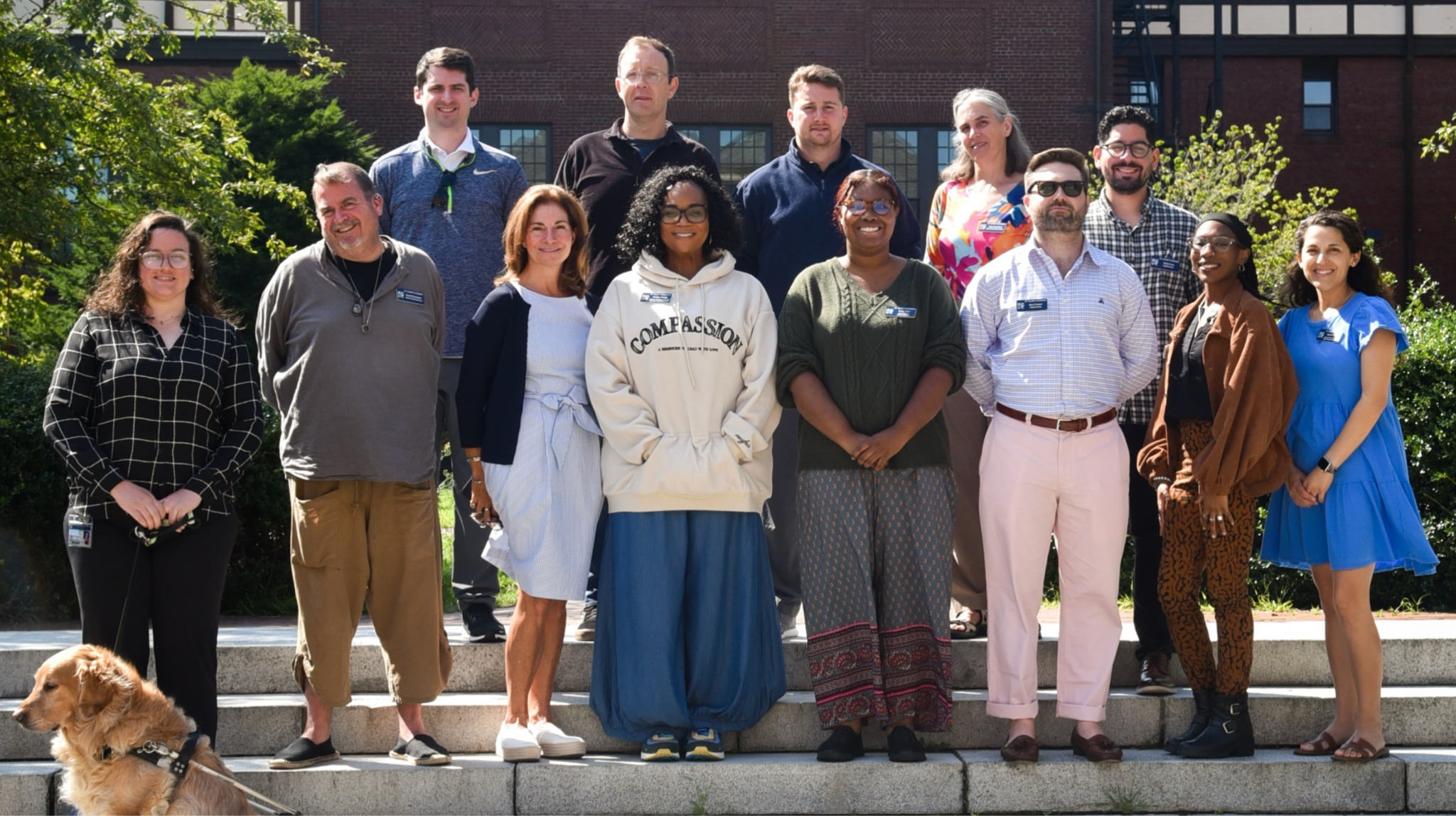
This year, the St. Mark’s community welcomed new faculty members. With several weeks passed since Convocation, teachers were selected for an interview on how their time at St. Mark’s has been so far. Please greet them with a warm welcome!
By Claire Cho ’28 and Joy Kim ’28
This year, the St. Mark’s community welcomed new faculty members. With several weeks passed since Convocation, teachers were selected for an interview on how their time at St. Mark’s has been so far. Please greet them with a warm welcome!
Dr. Davis teaches classics, and this year he is teaching 4 sections of intermediate and advanced Latin. In his free time, he likes to go to the movies, play tennis, and play with his cat. His time so far has been really busy, but it’s been a lot of fun to get to know the students and other teachers and to learn about the culture and traditions of St. Mark’s. His favorite snack to get from the dining hall are cookies, when they have them. By the end of the year, he hopes his students can experience and appreciate the beauty and joy of the language: “Latin is a difficult language and learning requires a lot of memorization and practice, like learning an instrument. But, like an instrument, it’s also beautiful and fun.”
Mr. David Gammons was appointed to teach and direct theater at St. Mark’s during Mr. Kent’s yearlong sabbatical. His love for theater took him to teaching in boarding schools such Concord Academy and eventually to direct professional plays. In fact, he is currently working on two professional plays in the Boston area: Down in the valley by Kurt Weill and Hamlet by Shakespeare. In coming back to teach in boarding schools after an 11 year departure from them, Mr. Gammons expressed his excitement in again securing an opportunity to work with high school students whom he described as unusually passionate, talented, and diverse. In his free time Mr. Gammons enjoys reading, exploring, traveling, and swimming. He considers Shakespeare to be his favorite playwright of all time and feels most compelled by Macbeth - Titus Andronicus being a close follow-up. Moreover, he is also drawn to the works of Tennesse Williams, whose books, such as “A Streetcar Named Desire”, became infamous for their literary merit. Mr. Gammon looks forward to familiarizing his students with themes in theater they may be unfamiliar with, including the theatrical traditions from the 1600s, the works of the ancient Greeks, and also Sanskrit theater.
Mr. Ryan Farrington teaches one section of III form English and has joined St. Mark’s this year as the director of library and digital learning. Mr. Farrington came from California and he loves to explore his surroundings in his free time. His favorite snack from the dining hall is iced coffee, as it benefits the bulk of his to-do list. He greatly appreciates the landscape West Campus provides. Also he has expressed interest to explore the hiking trails behind West Campus. He wants to work on making the library a more comfortable place for students. The design of the library changed a lot this year and he confirmed that he will continue to renovate the library to accommodate more books and students. Furthermore, he advocates and plans for more textbooks in students’ curriculums to be included in the library to support their academics. Mr. Farrington also devised a lease system to ensure books are circulated often and to encourage students to read more and explore more.
A Class of 2026 Memoir
by Catherine Zhang ‘26, Anouk Shin ‘26, and Abby Stone’ 26
It feels like just yesterday we were trekking our way to West Campus as the last class to live across Marlboro Road. That was 2022, though. Now, it is 2026, and the year that seemed so distant not long ago is finally here. On this Prize Day, May 25th, 107 lions are leaving the den, each a product of four years that challenged us, changed us, and connected us. Here’s our final roar:
The Guinea Pig Class:
The Class of 2026 was the guinea pig of school policy, namely being experimented on with the creation of Integrated Science during our freshman year. We look back on busy days of diving into cancer one week, then the Lewis structure in the next, and curse the underformers who ‘didn’t have to go through the standards-based grading’ under our breaths.
As we said goodbye to Integrated Science after sophomore year, we said hello to a new scientist: our new Head of School, Dr. Hills. With a new administration leading our lion pride, 8:00 AM chapels and the color schedule were officially a thing of the past. What we used to call “Long Plum Block” simply turned into “A,” “B,” and “C,” all with a uniform length of 65 minutes. Though we lost the color in our schedule, we brought a new shade of blue to our school during this time: amending the dress code to allow blue jeans! Along with these small adjustments, Dr. Hills brought to us a shift in the big picture: school starting in August and ending in May, with Lion Term now just before our two-week March break.
One change our class will not get to see, though, is the departure of Flik Dining Services. While some did not mind Flik as much as others, many agree that the same orange chicken every seated meal became old, and not being able to get our own portions as of last year has definitely left sour tastes in our mouths.
Our Favorite Memories:
Many of our fellow seniors, looking back on their four years, described their time as “memorable,” “bittersweet,” “discovering,” “chaotic,” “magical,” “noctivagant,” and “formative.” From Brantwood Camp to Senior Sunrise, from winning just one football game (excitingly under the lights versus Middlesex) freshman year to making our first Bowl game in school history this past fall, our years at St. Mark’s have been shaped by countless moments, big and small, that brought us to where we are now.
Our time has been, in every sense of the word, truly ours. We will most certainly miss Groton night, spikeball on the quad, evening chapel all dressed up together, chicken parms at seated meals, ladies’ tea, and pack the den games. We’ll miss chasing people down the hallway for 009, senior privileges, and going on school trips across the globe. Most of all, we’ll miss the friends we made along the way who made these moments unforgettable.
Some of the most cherished memories include: “the whole dorm rehearsing for songfest,” “winning the ISL softball consolation tournament as the underdogs,” “hanging out in the Thayer hallways and debriefing,” “a volleyball game turned into a big match with locals and tour guides,” “playing in the elite 8 hockey finals at UConn,” “taking a field trip to the courthouse,” “going on walks with friends and exploring campus,” and so much more.
What We Learned Along the Way:
In these four years, we also discovered that “we thrive in unfamiliar places and situations,” “we don't care that much about what other people think,” “we are stronger and more independent than we thought we were,” “we can handle tough situations and make new friendships with people we never expected,” and “we can really push myself to be the best version of ourselves.”
Some of us wish to advise our freshman selves to believe that “everything happens for a reason,” to “go to all the games,” to “sleep and exercise,” to “embrace everything fully,” to “challenge ourselves harder,” to “take advantage of opportunities,” to “try new things, meet new people,” to “be kind to ourselves and others,” and to “not let other people’s word get into our heads.” This year, we reflected on many of these lessons in our chapel talks, passing down our advice to the underformers after singing some of our favorite chapel hymns. We will continue to carry the lessons we shared in Belmont Chapel with us, letting them guide every step of our journeys beyond the den.
Now that we are leaving St. Mark’s, we will bring “the realization that we are going to really miss this place,” “newfound independence,” “friendships,” “amazing memories,” “connections with mentors,” “confidence,” “the spirit of this community,” and “a sense of who we are and who we want to become.” Ultimately, these are the parts of St. Mark’s that will stay close to our hearts even when Southborough seems so far away.
Thank you:
If we could sum our time up in just three short words, it would be these: Age Quod Agis. Through these four years at St. Mark’s, we have learned the lessons, found the friendships, and cultivated the skills we need so that we can ‘do what we do’ best as we enter this next stage of our lives.
So thank you, St. Mark’s, for the people who lifted us, the places that grounded us, and the lessons that shaped who we are. Once a lion, always a lion.