
Prize Day Issue
May 15 2026

Endowed Faculty Chairs 2018
by Sanjna Patel '19
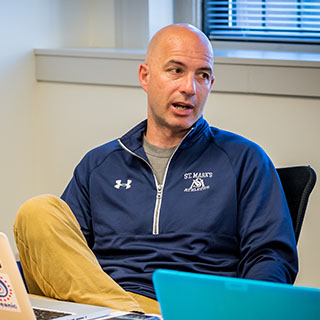

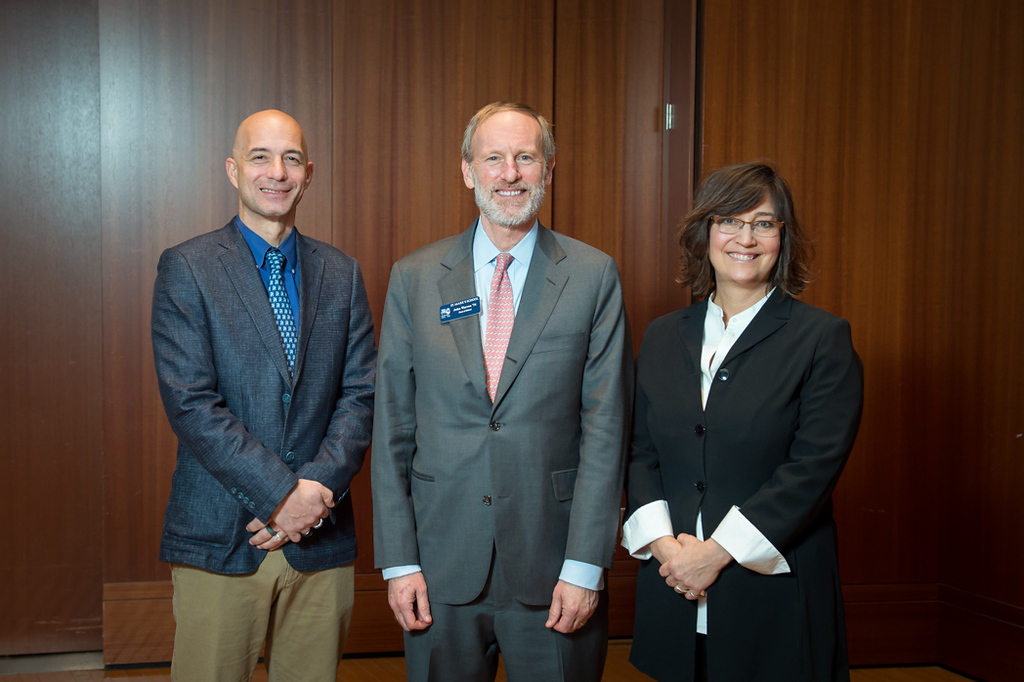
On January 19th, 2018 the ceremony of the Endowed Chair Installation took place. This ceremony awarded the Trustees’ Chair to John Camp, Associate Director of The Center, Student Enrichment and English Teacher, and The Mrs. William Greenough Thayer Faculty Chair to Heather Harwood, Classics teacher. The entire St. Mark’s community gathered to honor and congratulate both Mr. Camp and Dr. Harwood for their incredible achievements.
The Trustees’ Chair is a “fully endowed faculty chair established by the St. Mark's Board of Trustees and by the generosity of an anonymous challenge gift.” When asked if Mr. Camp expected this award he said: “No! When I earned the Kidder Faculty award on Prize Day in 2012, I didn't expect that, either. I will say, though, that I work diligently to be the best teacher and colleague that I could be so that I could be considered worthy of an award. As a teacher, however, I would never expect an award. I'm happy when my students get awards!” Receiving the award of this Chair is an incredible honor and is extremely prestigious. Faculty vote upon these chairs and it is apparent that the St.Mark’s community appreciates Mr.Camp’s contribution to the school as a teacher. When asked what this Chair means to him personally, he responded: “The Trustees Chair is probably the most important honor that I will get in my career. St. Mark's isn't a stepping stone job for me--rather, I would like to be an important stone for the school for the remainder of my career; the chair honor makes me feel that part of the school, which is a great feeling.” Colleagues and students have been very supportive of the well-deserved award, as Mr. Camp says, “I sincerely appreciate the comments and support that I've received from my colleagues. Each congratulation or comments that I got are really important to me. Immediately after Mr. Warren made the announcement at school meeting, Colin Boylan emailed me to say congratulations. That was an awesome message to get!” As a community, we are all very proud and pleased with the honor that Mr.Camp has received.
Dr. Harwood was awarded The Mrs. William Greenough Thayer Chair. This Chair was created in the memory of Violet Otis Thayer who was the wife of the sixth St. Mark’s Headmaster. It was created in 1962 and stands as the second longest faculty Chair. Dr. Harwood said that she “never expected it to be me” when asked about her thoughts on receiving the award, she called it a “big surprise!” Her hard work as a teacher has been recognized by the community and she has received positive remarks about the award. Dr. Harwood mentioned how “colleagues have been so generous and kind with their comments and congratulations. That outpouring has been the most moving for me. It makes me feel very appreciated and known by my colleagues which is pretty special.” Even after receiving this award Dr. Harwood wants to keep doing more for her students and to better herself as a teacher, she believes that she still has a lot to learn. “ A teacher is someone who is always learning. I think a teacher is paradoxically by definition someone who both wants their students to learn and also wants to learn more themselves. I feel I am engaged in teaching as an art form and am always practicing and trying to improve upon that art.”
Dr. Harwood and Mr. Camp are well-deserved recipients of the Chairs and highly respected teachers of the St. Mark’s community. We are excited and proud of their accomplishments and hard work.
Full speeches by Dr.Harwood and Mr.Camp from the Endowed Chair Installation ceremony:
https://www.stmarksschool.org/academics/faculty/endowed-chairs/heather-harwood
https://www.stmarksschool.org/academics/faculty/endowed-chairs/john-camp

Teaching Innovation
by Laura Drepanos '19

Recently, students at St. Mark’s have been noticing changes in the way classes are taught. More than ever before, we are noticing many similarities between our different classes. For example, it has become typical for a student to notice similar project rubrics in an English class and in a Math class. The situation has left many of us to wonder if there has been a change in the way that teachers at the school communicate with each other.
At the installation of new faculty chairs, Mr. Camp discussed how teaching at St. Mark’s is far more collaborative than competitive. He mentioned how teachers have the opportunity to learn about elements that other teachers use in their classes to incorporate these into their own classes. To those of us who have noticed these similarities between classes, this piece of information made sense. Many of us were even impressed that teachers worked so hard to make our classes better. However, this left many of us to wonder– have teachers always been this collaborative?
To try to find some answers to this question, I discussed with Mr. Wells and Ms. McColloch– a Physics teacher and French teacher respectively. These two teachers represent different perspectives of the school, so I expected to find vastly different answers to my questions. While both offered unique perspectives, I was surprised to find that both teachers have always seen St. Mark’s as a place where teachers work together on class structure. However, there has been change and general innovation in the way teaching is viewed here.
When Mr. Wells first arrived at St. Mark’s, the discussion of the “craft of teaching” was far less frequent and teachers did not reach out as much to try new class activities and software as they do now. The only direction he received from the head of the math and sciences department on his first day was a grade book, a pad of paper, a red pen, and the instruction to “maintain order.” However, he sees the change in teaching as a gradual change that has improved over time rather than a recent revolution.
Ms. McColloch’s perspective seemed to support Mr. Wells’ idea that the faculty have been consistently working to enhance the learning experience at St. Mark’s for a while now. Since Ms. McColloch began teaching here, she has always worked closely with the other French teachers to share ideas and implement new teaching strategies into her classes to benefit the students' learning. She mentioned that the longer professional development meetings that have occurred on a few Wednesday mornings this year have provided more opportunities for teachers to share the work they have done in their classes. While the forty-five-minute block on Thursday mornings is typically only enough time for a presentation or a discussion, this longer block on Wednesdays allows for more collaboration. For example, Ms. McColloch got the opportunity during one of the Wednesday meetings to go to a workshop that Mr. Dolesh and Ms. Brown ran that focused on the team-based learning idea that Algebra II students practice. Ms. McColloch found this inspiring: “Hearing how other teachers have really interesting ideas and how they use them, it gets you all excited to figure out how you might use these cool ideas in your own classes.”
So how else have faculty been working to improve classes? One of these ways is by doing research on cognitive science. Andrew Watson, a brain, and education specialist and the founder of the professional development group “Translate the Brain,” has come to numerous faculty meetings to talk about how learning works so that the teachers could understand it from a scientific perspective. Mr. Wells recalls this is as one of the most memorable faculty meetings he has been to at St. Mark’s. Faculty have also been doing research on their own; for example, Ms. McColloch mentioned that she was part of a group of faculty at St. Mark’s who was able to get a grant to research blended learning. This type of collaborative work is not unusual among St. Mark’s faculty, for Ms. McColloch mentioned that teachers who have common ideas and interests regarding education will often form a group and work together to discover how these concepts can be incorporated in different ways into classes. She clarified that there has not been any push by any faculty at St. Mark’s to collaborate more, it is just that teachers are getting excited and discovering how beneficial this type of work can be. In addition to learning how newly researched concepts can be applied to their own classes, teachers also look at how an element from a completely different class at St. Mark’s could fit in as well. For example, Mr. Wells has found a way to incorporate a version of the learning evaluation infographic in his Modern Physics class that is used in the Advanced Biology course by Ms. Berndt and Mr. Corliss.
To better understand the overall objective of teachers at St. Mark’s, I talked with Dr. Worrell to get her perspective as the Director of the Center for Innovation or Teaching and Learning. In response to my question regarding how the faculty are collaborating and seeking out innovation, she clarified that "Innovation in teaching is both about mindset and practice; it is a commitment to collective learning, a collaborative culture, and iterative practice in order to design the best possible learning opportunities for all students.”
While students often get recognition for their research and work, teachers are also doing interesting work behind the scenes to ensure that the teaching strategies used at St. Mark's are as beneficial for us as possible.

SM Global Citizenship in Action:Chilean Exchange
by Kaela Dunne '18 and interviews conducted by Ji Woo Kang '21
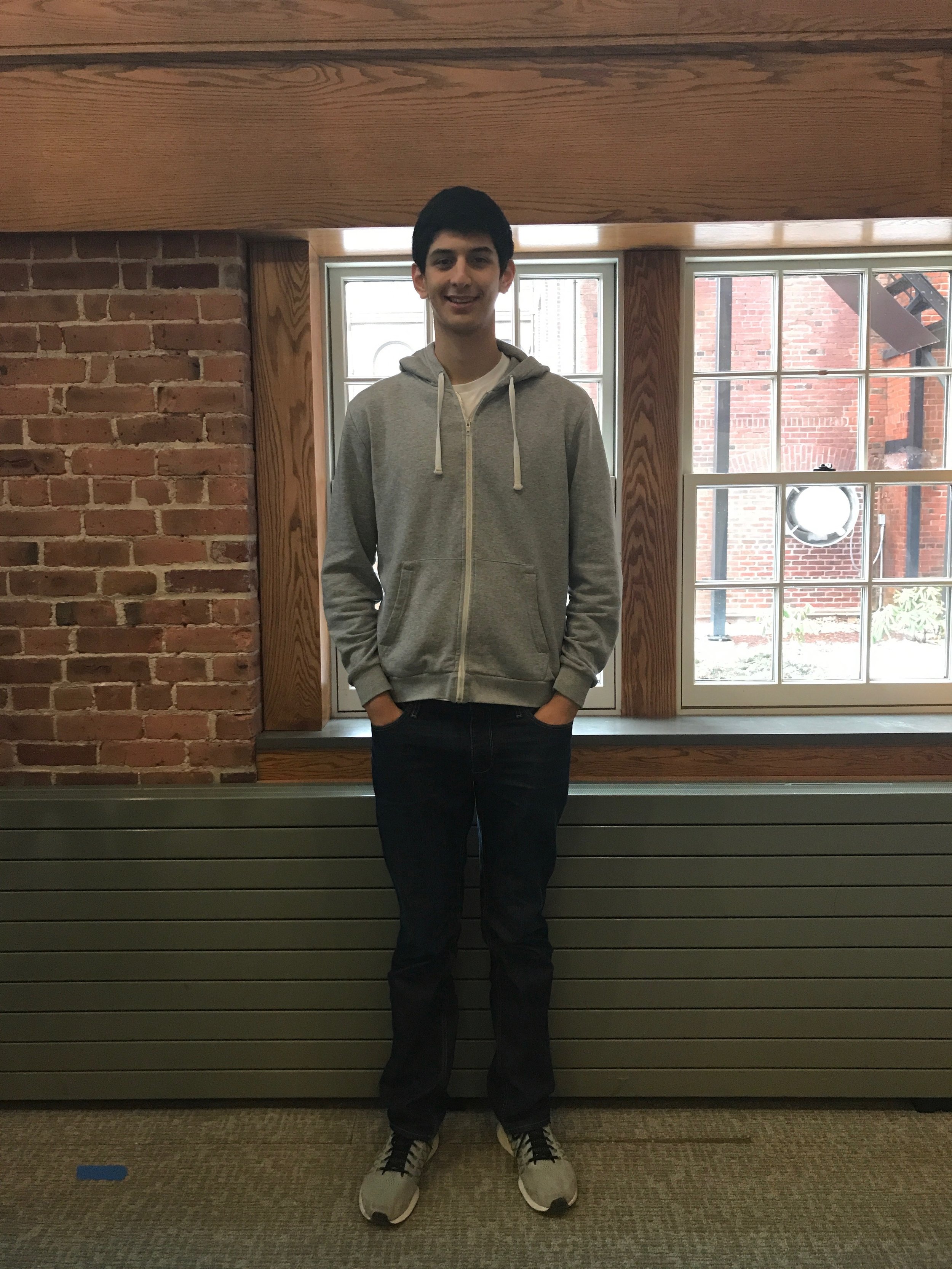
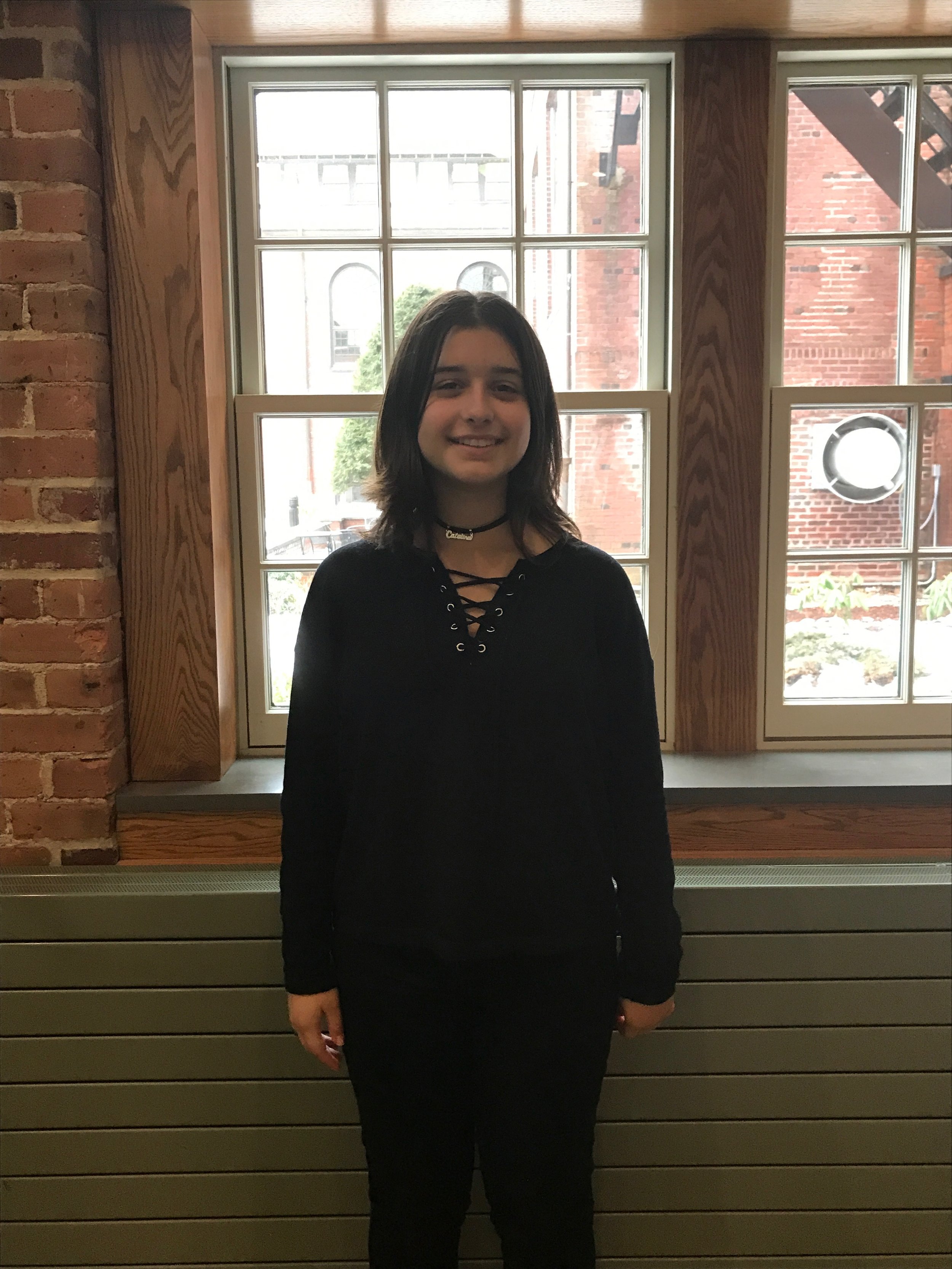

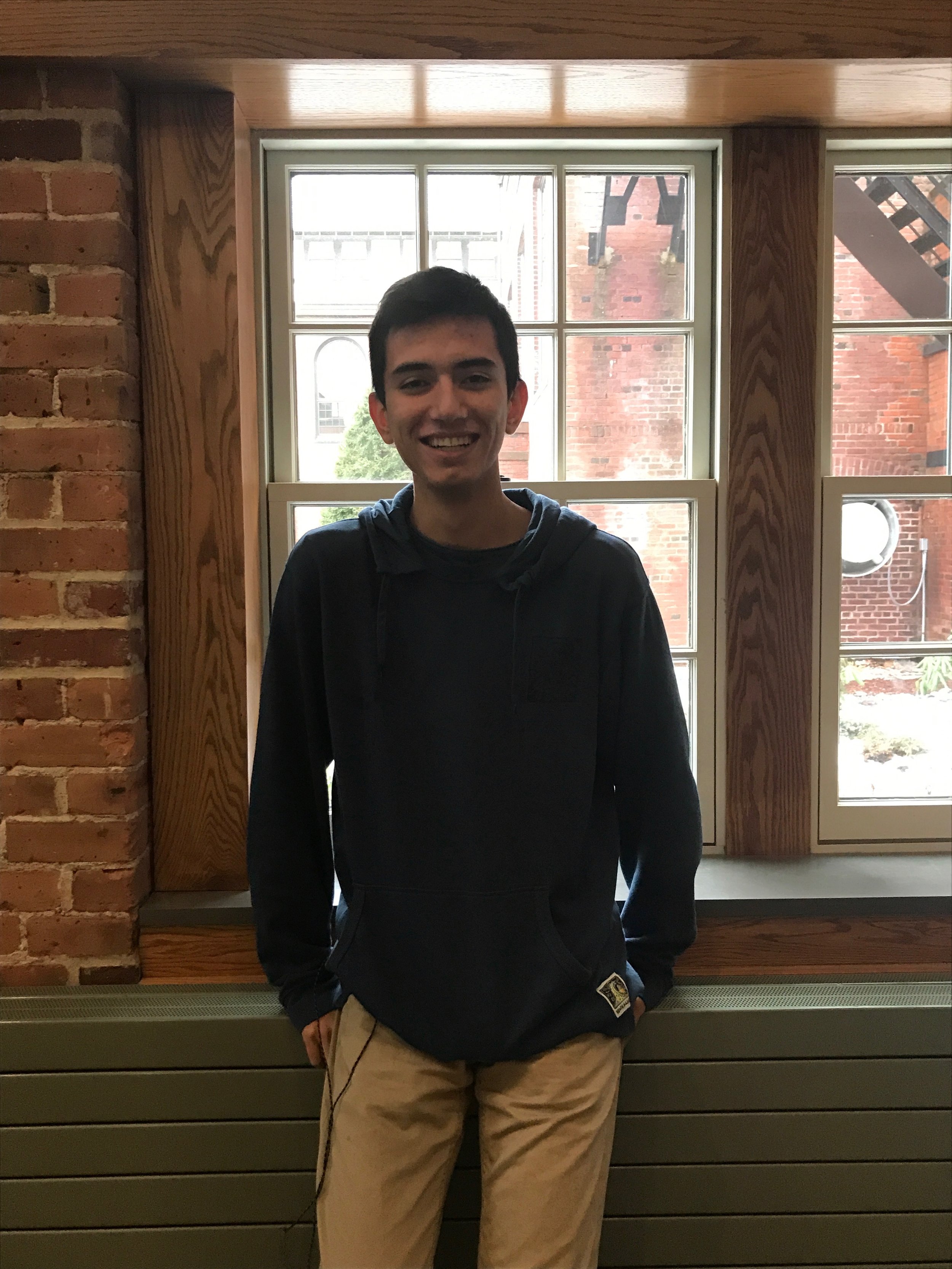
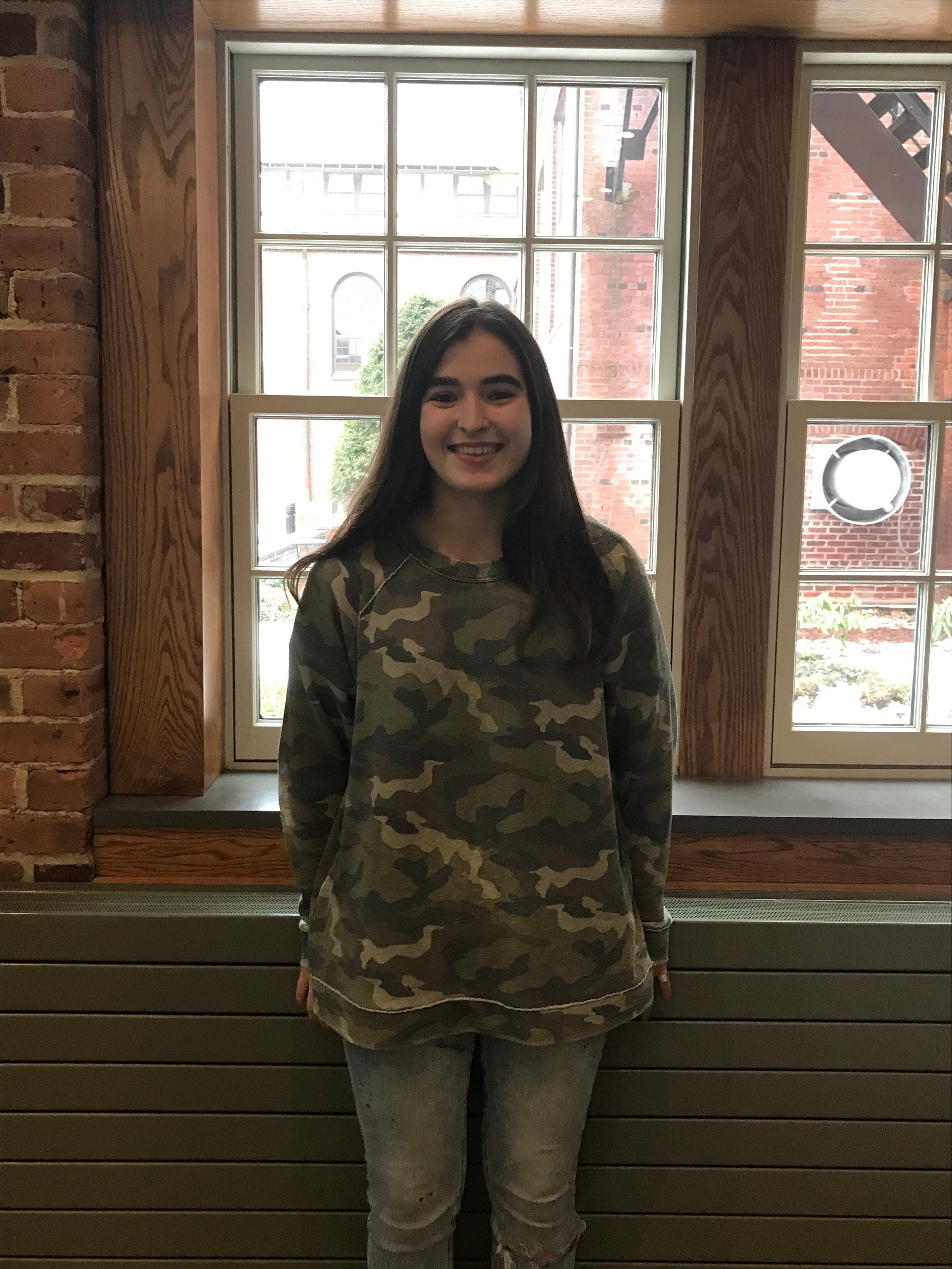
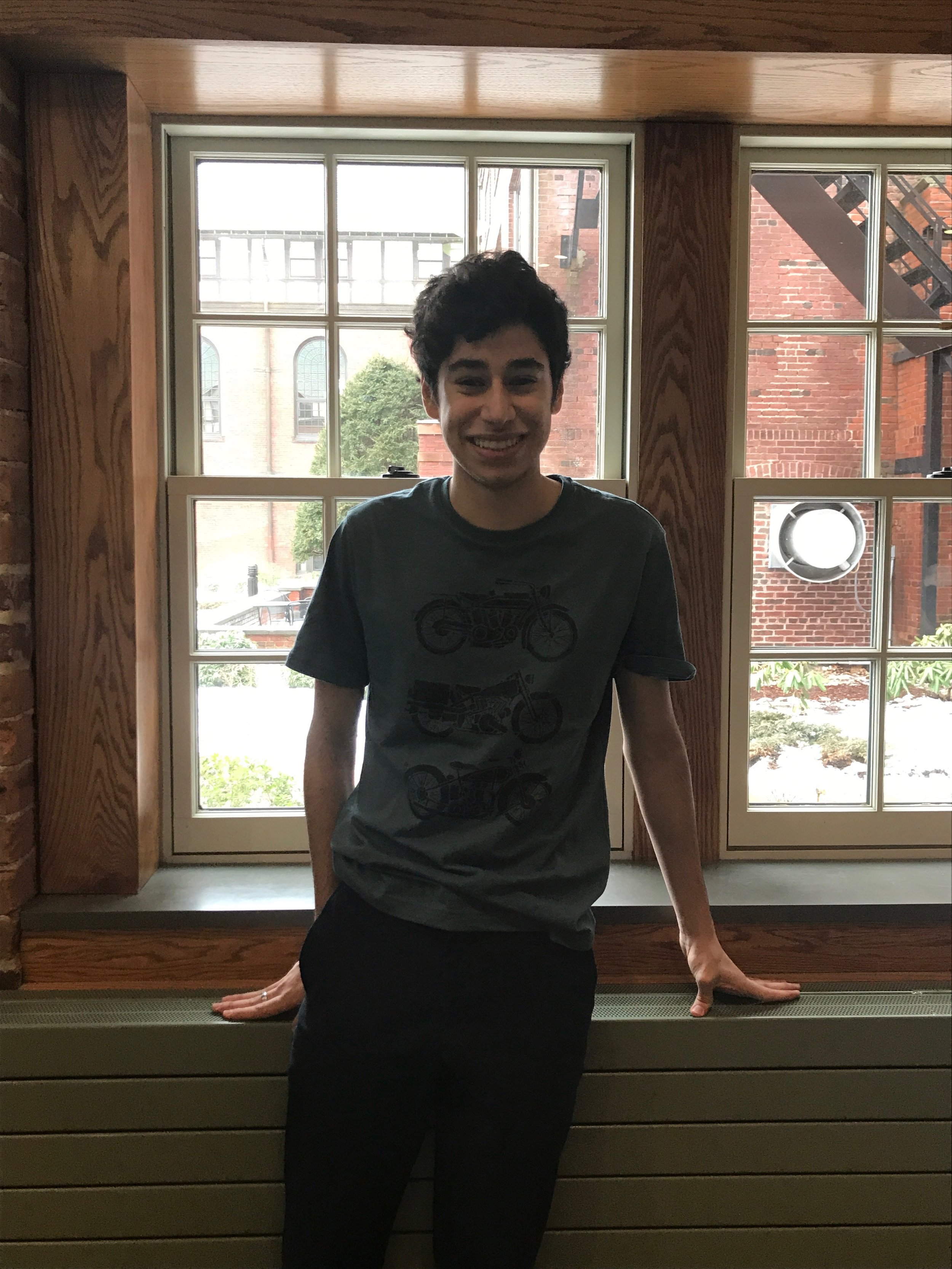
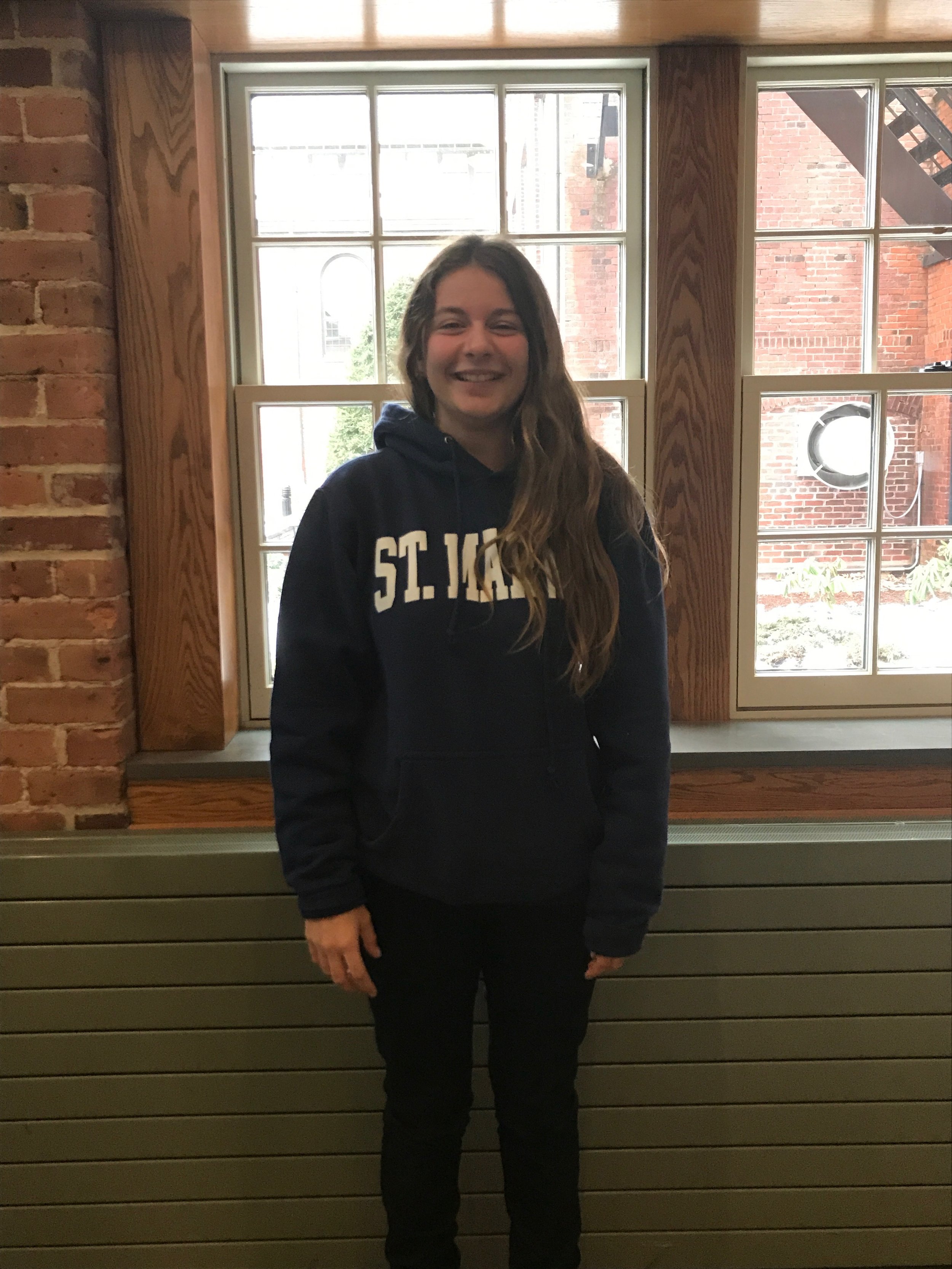
As most of you know, the Chilean exchange students headed back to Chile last Monday after a month-long stay at St. Mark’s and, according to Mr. Cifuentes, St. Mark’s Partner School Coordinator, “they had a great time!” Mr. Cifuentes and Dr. Warren work together to ensure that St. Mark’s global exchange programs run smoothly and that St. Mark’s students are acclimating well to their exchanges- that students visiting us are made to feel at home and welcome in the community. As our exchange students visit a totally new part of the world, they get to experience academic and community life at St. Mark’s, but also learn about American culture beyond campus. In addition to attending classes, the Chileans also got to see the area we live in from a tourist’s point of view. Mr. Cifuentes took them into Boston to experience the city and its history, particularly the Freedom Trail. The Chileans also spent a day in Cambridge. Mr. Cifuentes reports that “they love to shop!” and they particularly enjoyed frequent trips to the Wrentham Outlets and the Mall. Additionally, Ms. Fu took them into Boston to celebrate the Chinese New Year in Chinatown. So, not only did our Chileans get to experience the community and academic aspect of St. Mark’s, but also the sharing of cultures and global citizenship that St. Mark’s works towards. Looking back on their stay, Mr. Cifuentes reflects that, “Overall, I think they liked visits to Boston, shopping and the community feel at St. Mark's.”
Investigation on Michael Flynn
by Anishka Yerabothu '20

On December 1, 2017, Michael Flynn, former National Security Advisor to President Donald Trump, pleaded guilty to a felony charge of lying to the FBI. He arguably had the shortest tenure of post in U.S. history! He served in office from January 20, 2017 to February 13, 2017. Flynn resigned after it became apparent that he misled Vice President Mike Pence about the nature of his conversations with Sergey Kislyak, the Russian Ambassador to the U.S. On February 13th, the Washington Post reported that the Justice Department informed the White House that Flynn “mischaracterized” the nature of his conversations with Kislyak to such an extent, he had made himself vulnerable to blackmail.
Robert Mueller was investigating the possible collusion of the Russian government and members of the Trump campaign during the 2016 US Presidential Election. Flynn admitted that he had lied to the FBI about the nature of the phone calls with Russian government officials. Later, he agreed to cooperate with Mueller’s investigation.
Barack Obama, President at the time, had just imposed sanctions on Russia for its interference with the 2016 election. Flynn was accused of lying to the FBI about being in contact with Russia right after the Election, attempting to block a UN Resolution condemning Israeli settlements in exchange for removing these sanctions.
Michael Flynn is also suspected of having vested business interests with Russia and Turkey. According to a whistle blower, Flynn texted a business colleague saying that the plan was “good to go.” The “plan” in question was to build nuclear power reactors with the Russians in the Arab world, given that sanctions would be lifted. Moreover, he is alleged to have been part of a discussion to kidnap a Muslim cleric wanted by Turkey, since the U.S. refused to extradite the cleric.
Former FBI Director James Comey testified that Donald Trump had asked him to “go easy” on the investigation into Michael Flynn. Trump tweeted, “I had to fire Flynn because he lied to the Vice President and the FBI. He has pled guilty to those lies. It is a shame because his actions during the transition were lawful. There was nothing to hide!” This tweet is tantamount to admitting obstruction of justice. In response, Trump’s lawyer claimed that he drafted the tweet, not Trump. He claims that the President “cannot obstruct justice because he is the chief law enforcement officer, and has every right to express his views on any case.”
Mueller’s team is investigating potential obstruction of justice when Donald Trump fired James Comey as Director of the FBI. The role of Trump’s son-in-law, Jared Kushner, is also being investigated as part of the probe into Russian interference. This is a federal investigation that seems to deepen with each passing week. Stay tuned for the next update!
Solar Panels on St.Mark's Campus
by Laura Drepanos '19
One of the newest additions to the St. Mark’s Campus is the solar panel field. Situated on West Campus, this solar field is presented in a conspicuous manner. While many St. Marker’s have noticed this addition, very few know its exact purpose. I spoke with St. Mark’s new CFO, Mr.Robert Kuklewicz who explained some of the facts about the solar panels to me.
The system is a 641.7 kW DC and 480 kW AC set of panels operated by Tesla. While the solar panels do use solar energy to generate usable energy, that is not their primary purpose for St. Mark’s. Unfortunately, St. Mark’s uses far too much electricity to be generated by the solar field alone. The purpose of the solar panels is to lower the electricity cost for St. Mark’s. The savings is estimated to be fifteen to twenty percent of the annual electrical cost. However, this percent is dependent on the amount of sunlight for a given year. In addition to the cost savings, the solar panels are a great leap in sustainability efforts at St. Mark’s as they will generate energy in a manner that is far less harmful to the environment and more efficient than other methods.
An interesting fact about the solar panels is that they are not actually running yet. However, this is soon to change. In order for the solar panel system to be energized, the Southborough Fire Department needs to run a safety check to ensure that the department could turn off the system in the event of an emergency. Additionally, the engineers of the solar field need to give it a final survey for the Town of Southborough Conservation Commission. As these are the only tasks remaining, the solar panels should be running by the end of the month.
Tree Lighting: Drone Footage
Video by Funny Movie Corporation
Article by Rick Sarkar '19

On the first Friday back from Thanksgiving break, St. Markers joined together for the House Cup Holiday Songfest, also known as Deck the Halls, followed by the Christmas tree lighting. The SM jazz bands opened up Deck the Halls with renditions of “Blue Christmas” and “Charlie Brown Christmas.” They were followed by Maple and Pine-Oak with original takes of holiday classics. Gaccon, Marr-Coolidge, Thayer, Sawyer, Coe, and Theriot-North also showed their holiday spirit with performances that included spirited costumes and live instrumental accompaniment. After the songfest wrapped up, the community moved outside to the VI form quad. Below is a video taken via drone of students enjoying the tree lighting. The video was provided by Funny Movie Corporation, a group that has been increasingly involved on campus this year.
Click link for video: https://youtu.be/CHJcJi6Cbbk
Holiday Dorm Decorations Up!
This year is the first year in which all dorms decorate their space for the holiday! We're sharing photos here to give you a sense.


Community Service at St Mark's
by Laura Drepanos '19

If you are interested in getting off campus and doing something that you can feel good about, sign up for community service! St. Mark’s does not have a community service requirement because the decision to do community service should be solely driven by your desire to help others. However, the school still provides students with many opportunities to live a life of leadership and service in this way.
If you are uncertain as to whether or not you want to commit yourself to community service, consider signing up for Our Father’s Table as it is the only community service opportunity that does not have a weekly requirement. Our Father’s Table is a soup kitchen in Marlboro that provides and serves meals for individuals and families. St. Markers who participate in OFT set the tables, serve the food and drinks to each individual, and clean up afterward. This is a fulfilling form of community service as your actions directly impact others, and additionally, you become familiar with the individuals who come for a meal regularly.
Another great community service opportunity is the Immaculate Conception after-school program in Marlboro. At IC, the kids really love to build close relationships with the St. Markers who volunteer. Volunteering consists of either helping the students with homework, doing crafts or games with them, or playing outside with them. Speaking from personal experience, coming into IC and seeing kids who are so excited to see you bring the best feelings in the world.
In addition to IC, there are many great community service opportunities to work with and be a good role model for kids. At the Boys and Girls Club, you can play with the kids in the gym or help out in the game, homework, tech, or crafts room. There are more children at Boys and Girls Club than IC, but St. Mark’s students in the past have really been able to have a significant positive influence on some of these children.
If you are interested in staying on campus for community service, the Lego League is a really great option. This is on Thursday evenings in STEM, and you get to help little kids build Lego robots for an hour. Helping children think critically and learn in this way can be very rewarding, and additionally, the children will develop close connections with the volunteers.
Lastly, our newest community service opportunity is Coding for Girls at the Trottier School in Southborough from 6-7 on Tuesday nights. St. Mark’s volunteers at this community service opportunity get to help teach a computer class for girls. In addition to the relationships you build, empowering young girls to pursue their passions in STEM is a really meaningful and undeniably worthy use of your time.
If any of these opportunities interest you, please contact Mrs. Wells or look out for the email that she will be sending soon. If you are unsure, I highly encourage you to at least give Our Father’s Table a try, and if you find that you like community service, branch out to the other great opportunities that the school provides!
Korean Exchange Students: Hear Their Voices!
by Lora Xie '20
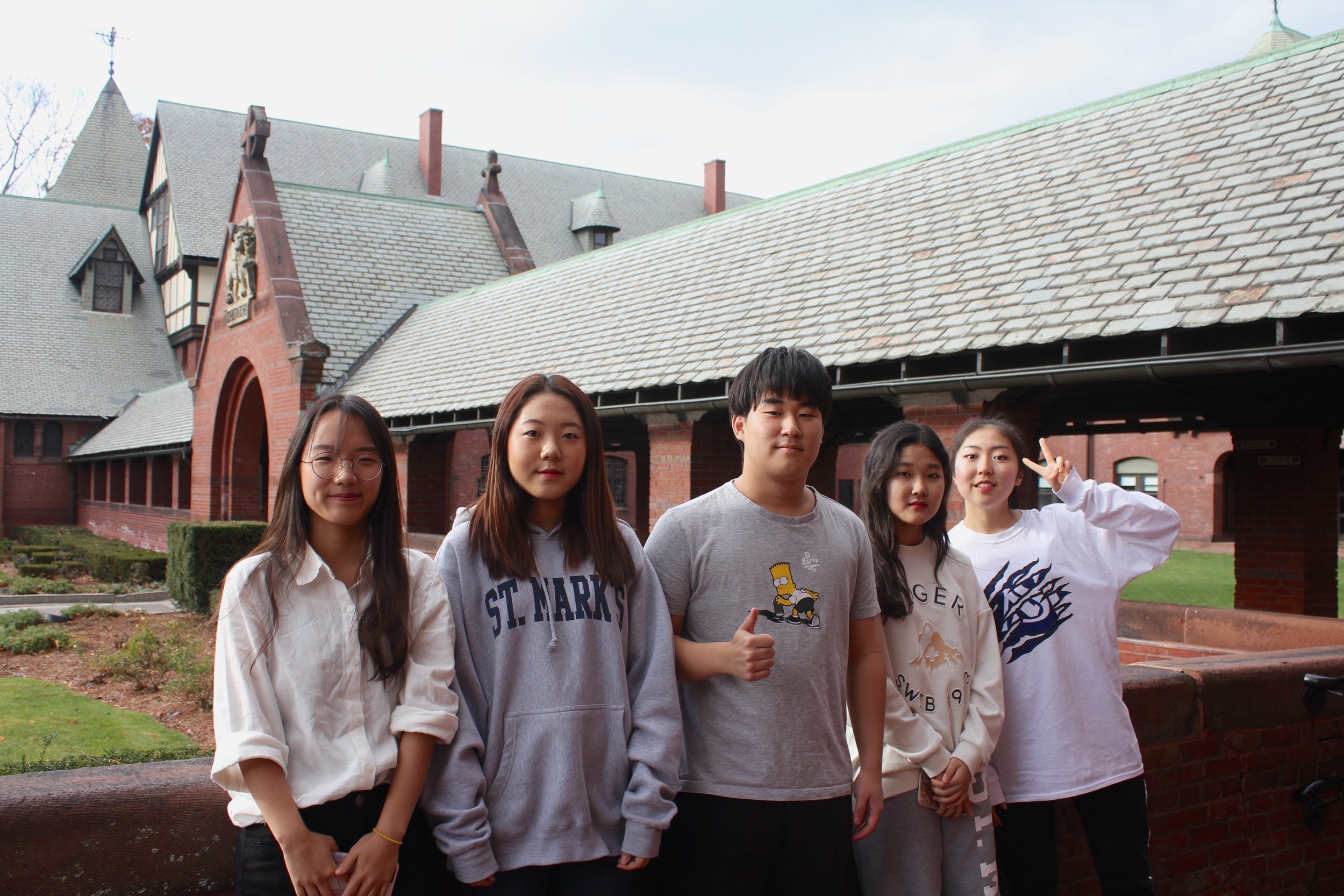
Name: Grace
Form: IV
Fun fact about yourself?
I had my appendix removed.
What’s the funniest/weirdest moment you’ve had since you’ve been here so far?
In my first day of class, almost everybody chose to sit across from me because I was new. It seemed like they were as scared as I was!
How is your experience here different from that at home? How do you feel about the difference?
I like how SM is more close-knit, cozy and diverse. In classes, because of the small size, teachers are closer to students, and students have the chance to participate more. I really like the school meeting at SM because it is relaxing and fun, and sometimes there is meaningful content like the video about Devin. In KIS we only have serious, formal monthly community meetings in the auditorium. For the same reason, I like the chapel talks too. Furthermore, I really appreciate the free blocks I have here at SM because we don’t have free blocks in KIS, even though we have many more assignments there. I like how I have time to take a rest here. Finally, SM has a much more diverse community, and I love the diversity here. People are not afraid of differences, and they respect one another’s culture. I think that such open-mindedness is really important.
What would you say to someone who is considering an exchange program, either a student from SM or KIS?
I would definitely recommend it! It might be challenging, but you will love it! It gives you great experiences and a lot of new friends. You will discover a new self. Harry is even seriously thinking about transferring to SM. Don’t be intimidated by something you have not tried yet.
Name: Julie
Form: IV
Fun fact about yourself?
I have no eyebrows. Hair does not exist above my eyes, so I struggle every morning to make myself not look like Mona Lisa. I heard that eyebrows grow at the same speed as our hair does but mine does not like to grow at all :(
What’s the funniest/weirdest moment you’ve had since you’ve been here so far?
I was surprised to find out that sometimes teachers allow students to have “second breakfast” or work in places of their choice during class. Such occasions are definitely not possible at KIS.
How is your experience here different from that at home? How do you feel about the difference?
The classes here at SM are more engaging because it incorporates more discussion compared to the lecture-based classes at KIS. Also, there is a greater emphasis on “non-academic knowledge” here, like how to be a better person. For example, in my social justice class, the Gray colloquium speaker came in and talked for almost the whole period. This would not happen at KIS, where covering course material would be the priority. In addition, I like how SM is more cozy and people-oriented. I think this derives from the long history of the school. Finally, the buildings here have character. In KIS, buildings all have an industrial look because they are recently constructed.
What would you say to someone who is considering an exchange program, either a student from SM or KIS?
You will need to prepare for being open-minded about differences and new experiences. It might be discomforting at first, because you might feel like you are not “owning the place.” But it is exactly this out-of-comfort-zone experience that teaches you things that you cannot learn in your own culture. Even if you regret going on the program, it is better to regret doing it than to regret having the experience at all!
Name: Emma
Form: IV
Fun fact about yourself?
My mother is from Mongul; my dad is from China; but I was born in Korea.
What’s the funniest/weirdest moment you’ve had since you’ve been here so far?
It feels weird when people asked me this question: “how good is your English?” I guess it’s a cultural difference. In Korea, we never ask foreigners “how good is your Korean?”
How is your experience here different from that at home? How do you feel about the difference?
I think the biggest difference is that students at SM participate more in class. In KIS, students rarely ask questions. Also, SM gives students more freedom. For example, you can keep food in the dorm, you have free periods, and you can go back to your dorm room during the academic day if you have free time.
What would you say to someone who is considering an exchange program, either a student from SM or KIS?
Just try it! I think putting yourself in a new environment is important. You can make new friends, and you will feel refreshed.
Name: Harry
Form: IV
Fun fact about yourself?
Once I played 80 hrs of video games in 5 days.
What’s the funniest/weirdest moment you’ve had since you’ve been here so far?
I think it’s the overall difference. Korean culture is more conservative, so it shocked me a little bit to see people wearing minimal clothes in dorms.
How is your experience here different from that at home? How do you feel about the difference?
KIS has many rules that SM doesn’t have, such as no food in the dorm and no phone at night/during class. Classes here are more discussion-based and therefore encourage more student participation. The SM campus is really big, so there are more resources, like the PFAC building that is specifically dedicated to art. I also like the natural elements on campus. I do miss the air conditioning at KIS though.
What would you say to someone who is considering an exchange program, either a student from SM or KIS?
After coming to SM, I would definitely recommend any exchange program. You will be impressed by the new perspectives in a different culture, even from countries close to your home country.
Name: Sophia
Form: IV
Fun fact about yourself?
My name is actually Sophia, not Sophie. It’s misspelt in the email address.
Today (Nov. 6th) was my birthday!
I can sleep for 14 hours straight but I usually only get to sleep 6-7 hours a day in Korea (because of the amount of work of course).
What’s the funniest/weirdest moment you’ve had since you’ve been here so far?
I felt kind of weird when people asked me how much English I speak because it's a very unusual thing to ask in Korea. If some foreigners speak or understand Korean well, we just assume that they have mastered it for a while or have lived in Korea. Another thing I found weird is that people are allowed to use their phones during classes. In KIS, boarders do not get their phones until school ends, and day students are punished alike if they are caught using phones.
I find the spirit week very fun. Back at home we compete with other schools (there are only four international schools in Jeju island) vigorously for sports too, but there is not as much tension as there is in the rivalry between SM and Groton.
How is your experience here different from that at home? How do you feel about the difference?
In KIS we don’t have free periods, but study hall instead. We are not allowed to enter the dorm until school ends, and we have to get out of the dorm by 7:45 in the morning. Because there aren’t that many regulations, dorms at SM feel more like a home than a dormitory. Another difference is that at KIS we don’t have sports practice every single day. We only have 2 hours of practice twice or thrice a week, depending on the team. Also, at KIS, we have a lot more ongoing assignments and projects at the same time. A lot of students tend to sleep late at night.
What would you say to someone who is considering an exchange program, either a student from SM or KIS?
I would highly recommend an exchange program to anyone who gets to have the opportunity to do so. Just try everything you can. Don't regret after missing the chance!
If there is work that you need to do for the homeschool, (for me there is a lot, especially notetaking for Global Studies and Chemistry) please finish that earlier so that you can fully enjoy your exchange experience!