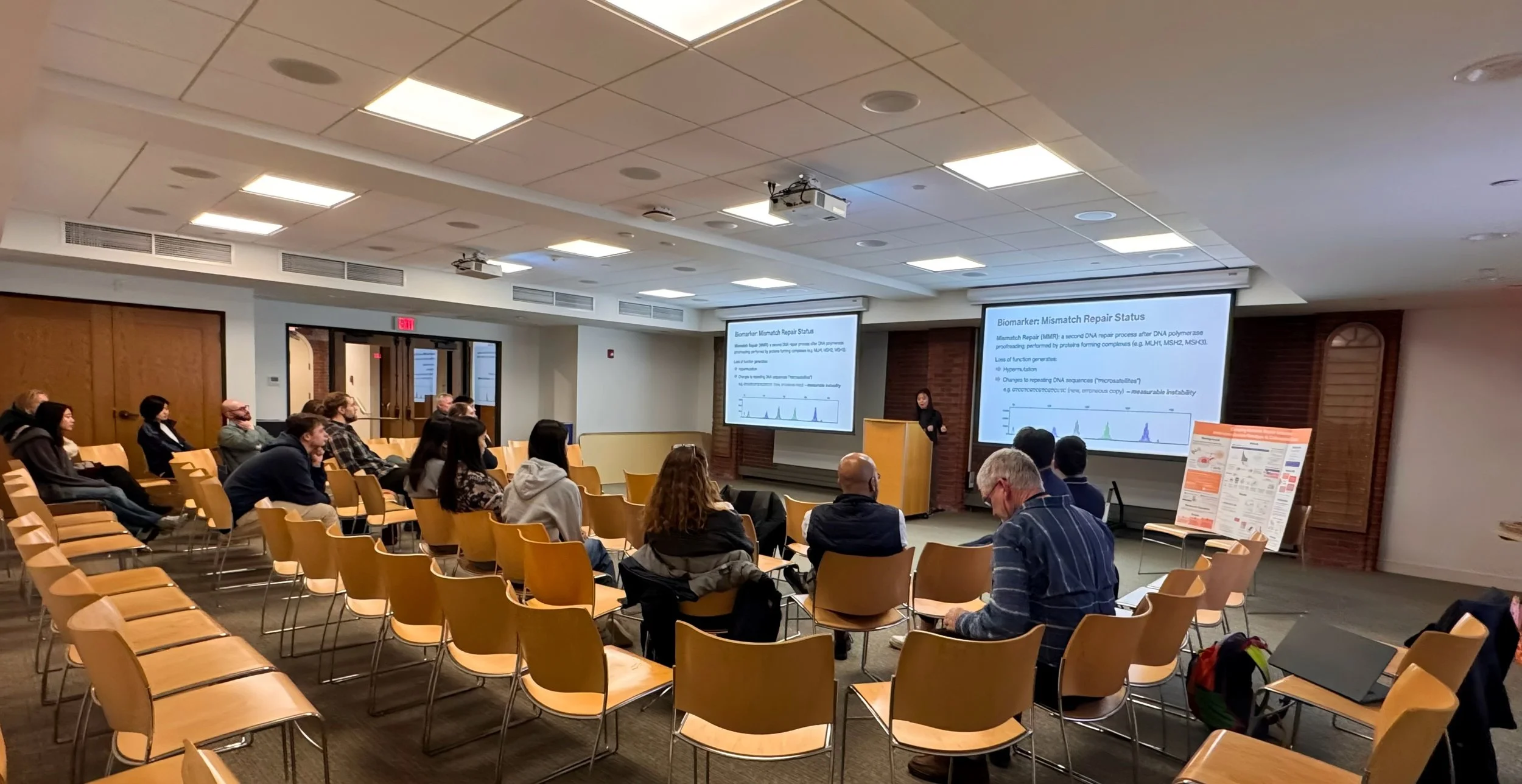
RNA Interference Research: Sherry Mi ‘26
by Claire Cho ‘28 and Joy Kim ‘28
Sherry Mi ‘26 has just completed a research project about Cancer and Immunology. We asked her a series of questions surrounding her work:
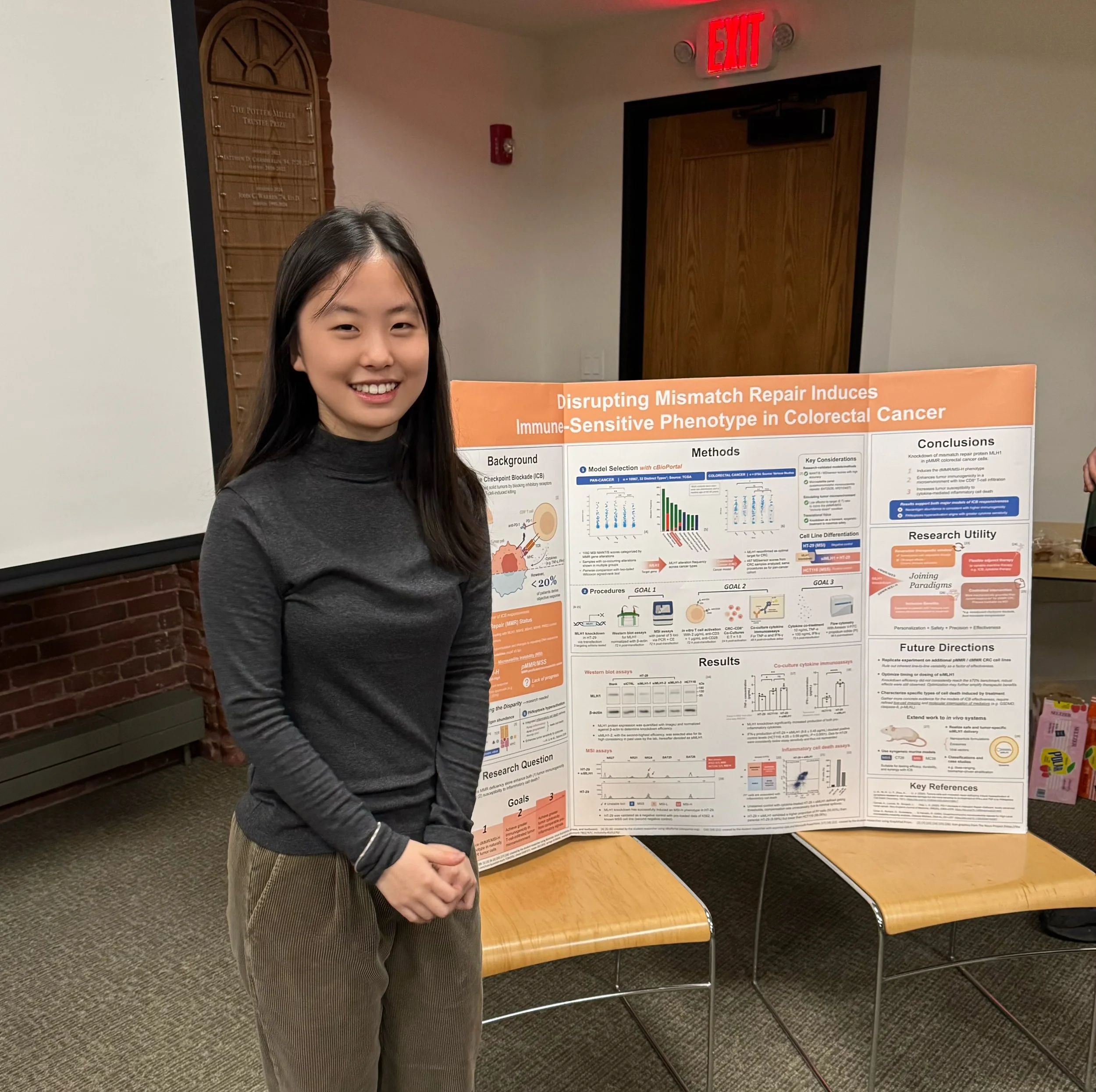
What was your research about?
“My research is about a specific topic in Cancer and Immunology research. It is about RNA interference, the most promising therapy in the field as of now. RNA interference is a technique that utilizes RNA fragments from the natural genome. The function of the system is to repair the damage to DNA and its genome caused by a mismatch. As of now, only a minority of patients actually receive benefits, so to address this disparity, I launched my experiment.
There is a lot of function in this system, even more benefit that people with an intact genome.
Artificially Inhibiting mismatch repair could have improved patient conditions drastically. This idea remains yet an experiential idea, criminally underexplored and often past treatments divulged into irrelevant treatments.Conducted in a lab experiment with cellulitis yielded significant results in disrupting this mismatch repair could be improved
How big of a immune response the cancer cells can illicit
The cancer cells fall more susceptible to the immune response
Basically, this is a paradox method that aims immunotherapy to become universal
Why did you start your research?
I used to be a cardiac patient diagnosed with cazenda heart disease, and ever since then I’ve stayed attuned to news regarding heart diseases. I had to have surgery for this condition my freshman year. Moreover, I've had many experiences with medical spaces as several members of my family battled cancer - my grandfather had colorectal cancer. Once diagnosed with a verdict, the experience hit hard, and I started actively looking for sources. I began looking into news outlets, seeking better therapy options.
Did you ever go back on your purpose, rethink your research… (have doubts)
One moment?
Spanned the summer of 2024—- a few days ago.
March 2025, collecting data, reading literature - unguided process, easy to get lost.
Even though there was a specific topic in mind, there were amazing articles branching out to other topics (‘maze’ where she felt that she had to cover everything - internally chaotic)
Wondering the meaning of her research
Resolution: slowed down the reading process and tried to organize the things she read into more detailed logs
Opened google docs and jot down all the relevant information - filtering out the information she does not need
Padlet to organize all the literature - allows you to connect between subtopics
Challenges faced during your research?
Sometimes it feels like you are in total control. In reality, a lot of the cell handling is simply microscopic. You cannot see the results until the end of the experiment, and that creates a veil of uncertainty. One instance is handling an acid named the western blot. Identifying the presence of protein determines whether the experiment was successful. Only after ___ could the results be seen—and they initially turned out to be unsuccessful. While challenges occurred during such extended periods of hands-on lab work, it was fun to adjust and carry on. The process of hands-on lab work was satisfactory and provided the motivation to push on.
Advice for students interested in conducting similar research?
My main advice would be to keep your ears and eyes out in the world; that is, be open to what is happening in the world. That could be tuning into news outlets, or reading a little more. There are amazing books on diseases. __, ___, and ___ to name a few. The goal is to make a habit of reading, whether it be once a day or once a week. The next step is to ask good questions. Start with the ones that could clarify your knowledge, then something experimental. Immunology was a large field, so for me, the research process started slowly. I would say my biggest achievement is being able to ask so many good questions. Pursue clarity, challenge current framework, and identify problems for tackling.