
Love Story Ended, Now What?
by Catherine Zhang ‘26
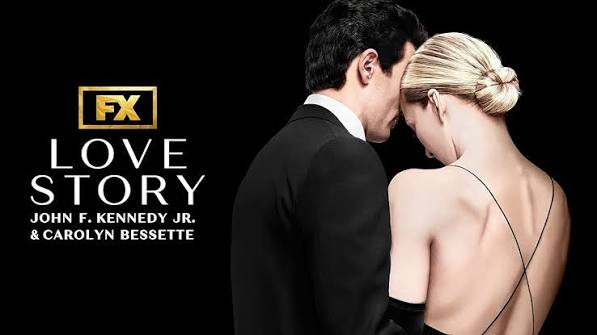
I, one of the millions who were captivated by FX’s latest series about John F. Kennedy Jr. and Carolyn Bessette’s love story, unfortunately, cannot find a better alternative show since the last episode was released.
Ever since a close friend put me onto this show, I have been talking about it nonstop. The ’90s-chic, minimalist fashion, exquisite selection of soundtracks, skillful storytelling through cinematography, and, of course, the sparkling chemistry between Paul Anthony Kelly and Sarah Pidgeon… If you haven’t watched it, please add it to your list. Trust me.
Perhaps it was my similar attraction to historical fiction, but I found various motifs and themes throughout the show to be relevant. Despite not everyone having the high-profile life they did, the struggle to meet expectations, the yearning for affirmation and love, and the unseen cost of living in the public eye are things we could recognize in similar forms.
Set historical accuracy aside, the series perfectly captured the end of many people’s idea of “American Royalty.” For those who lived through that era, this recreation reminds them of many things: a fallen rising star, a disputable relationship, an heir who could have taken on “Camelot,” a modern fairy tale turned reality, a tumultuous life…
But Love Story isn’t just a nostalgic tale. The record-breaking streaming hours tell us that people are not just watching because the fashion was good (yes, it was). We are watching because we are still seeing something the Kennedys seemed to promise.
The Kennedy mystique was the idea that American public life could be glamorous, and that a leader could be both compelling and good, and that politics could feel like something worth believing in. President Kennedy’s practical idealism was embedded in many American Dreams, and his son, the most eligible bachelor, inherited it simply by existing. Thus, to many, JFK Jr.’s death felt like the end of a great political dynasty.
Watching the show in 2026, though, that loss lands differently. There is something almost aching about revisiting a time when a single figure could unite people in hope rather than outrage, especially in an age of polarization. The weight of the Kennedy family still stays with us today, complicated, contested, and immeasurable.
So why am I obsessed with this show? I certainly loved the fiercely independent, stylish, and seemingly self-assured Carolyn Bessette. I loved how she was not just someone’s wife, but someone with her own identity, despite slowly being erased by it. And I have to admit, the selective portrayal of certain events and the simplification of certain characters has not been the critics’ cup of tea.
But deep down, Love Story, perchance, gives people permission to grieve something we didn’t know we were still mourning. Not just John and Carolyn, but the manifestation of idealistic America they represented. A country with a great hero worth mourning for. A family with prominence and a vision for the nation. A political dynasty that, for all its flaws and tragedies, made people feel alive.
The finale, “Search and Recovery,” has aired. When John and Carolyn reappeared on an imaginary distant island after the tragic crash, it reminds the audience that no one really knew who they were or walked into their lives; they only knew them by their personas, under the spotlight.
Maybe we are still searching for someone, or something, to recover from and fill the space they left behind.
