
Prize Day Issue
May 15 2026

Interview with Dr. Fish: Student Voice on Campus
Seven weeks into school, the complaints about the phone policy and the four-day schedule are still whirling around the school. While these policies have an anticipated impact on the community, unanticipated…
By Serena Lin ’28, Zihan (Chelsea) Cao ’28, and Dingyi Ling ’28
Seven weeks into school, the complaints about the phone policy and the four-day schedule are still whirling around the school. While these policies have an anticipated impact on the community, unanticipated comments are fermenting in the community. The phone policy effectively decreased inappropriate device usage during the school day, but the fully packed four-day week schedule has drained many faculty and students.
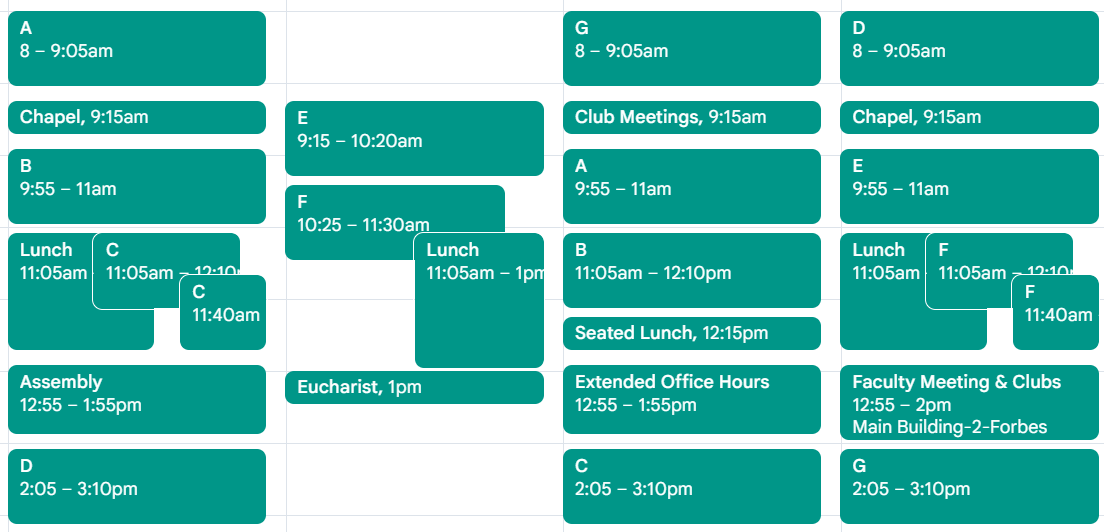
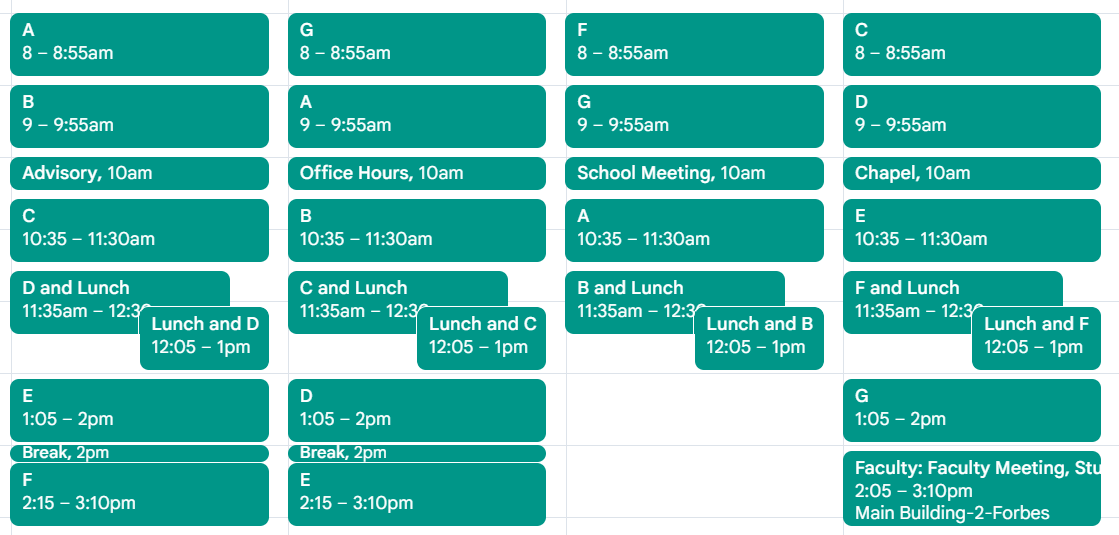
Comparison of Four-Day Week Schedule: 2025-2026 v. 2026-2027
This time, we got a chance to chat with Dr. Fish about the implementation of these new policies and his opinions toward them.
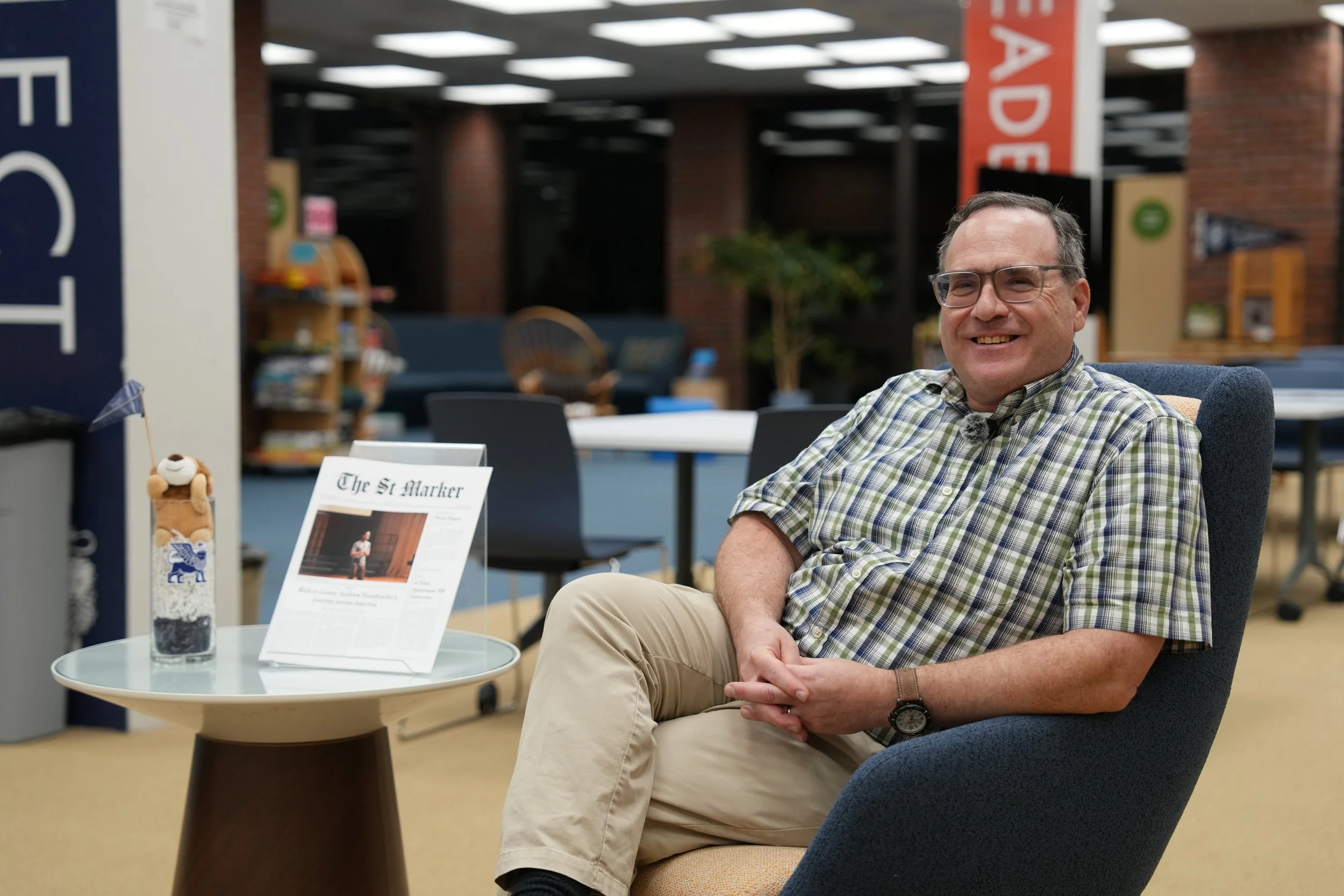
How do you feel about this school year so far, and what are your overall impressions of the student body's transition?
Dr. Fish: I think the year in general is off to a very strong start. I'm really pleased to see students showing up for all their academic and co-curricular obligations with genuine enthusiasm and energy. We are asking a lot of our students this year—sometimes even more than they initially realize they are capable of achieving—and for the most part, they are stepping up and coming through remarkably well. It sets a very encouraging tone for the rest of the year.
We've heard a significant amount of feedback from the student body regarding the new phone policy. What were the primary driving factors behind rolling it out at this time, and was student morale or social engagement a major consideration in that decision?
Dr. Fish: It wasn't implemented because we felt something was fundamentally wrong with our community; rather, it was conceived as a proactive way to enhance it. Our current strategic plan focuses heavily on fostering attentive relationships—encouraging students to interact directly with each other and with community members without the constant distraction and interference of cell phones. When other schools adopt similar policies, research and experience show that once students adjust to the shift, it generally leads to a much healthier environment socially, emotionally, and academically.
Have you personally started to observe those intended positive social and community effects taking shape on campus?
Dr. Fish: Yes, you definitely begin to notice key changes. When I walk into the dining hall or move down the hallways during the school day, students are engaged in face-to-face conversations with each other noticeably more than they were last year. Naturally, with any major institutional change, there are initial pressure points, friction, and practical adjustments that need to be made, but on the whole, we are clearly beginning to see the intended positive effects take root across campus.
What was the motivation behind fitting 21 classes into the new four-day rotational schedule, and what was the main driving force for modifying the academic calendar?
Dr. Fish: The schedule was structured specifically to ensure that we provide the necessary contact hours so students can master the curriculum and meet our academic expectations. However, the primary feedback we have received from students and faculty centers on the heavy homework load required to prepare for days that feature six classes back-to-back. We have actively heard that feedback, take it seriously, and are currently evaluating adjustments to ensure we maintain a healthy balance between rigorous academic learning and a manageable homework load for students.
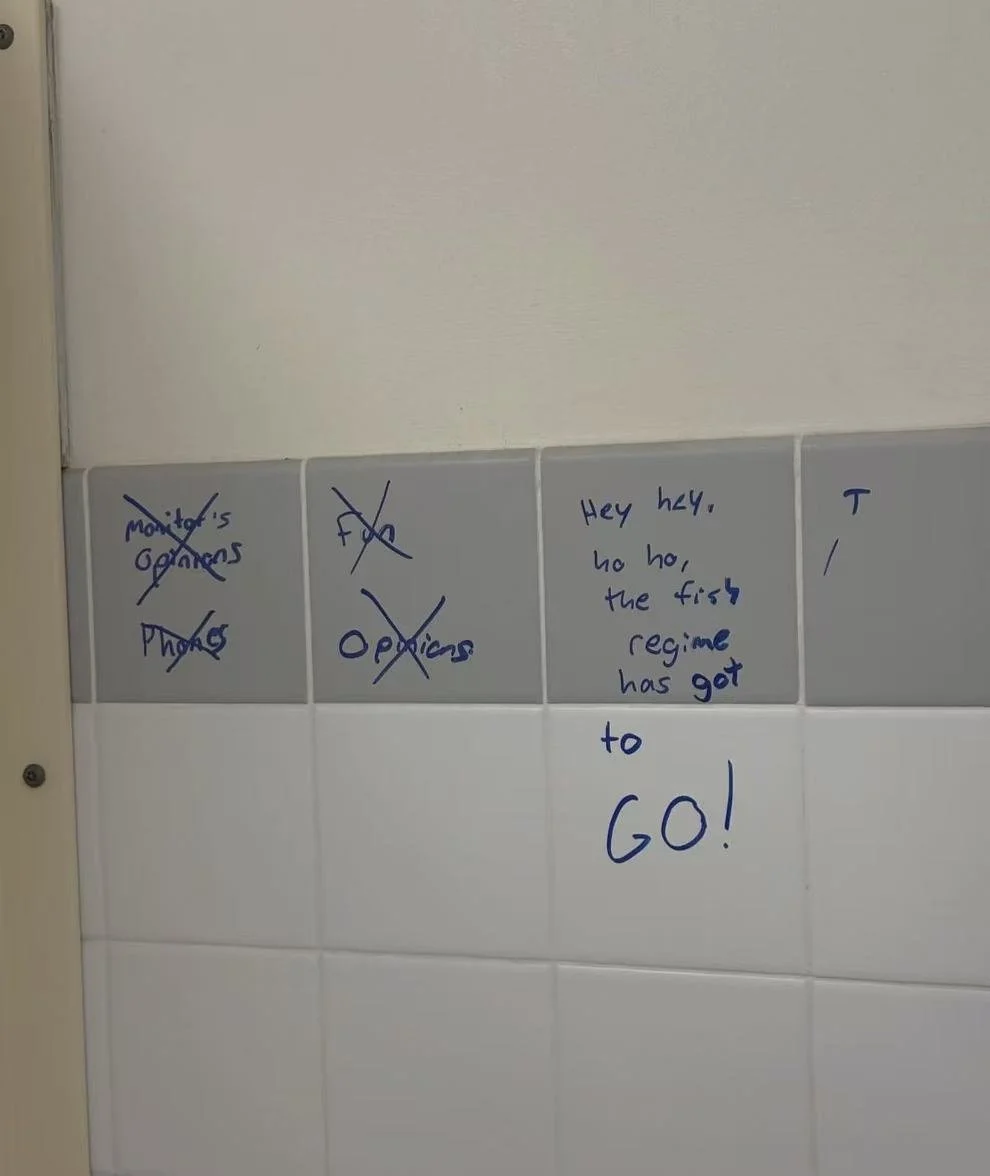
Fish Regime motto in Sawyer toilet
Our previous seniors wrote in last year's Editor's letter that they felt like the "experimental class," having experienced a lot of administrative turnover and shifting policies. How do you ensure a consistent goal for this school, so that students aren't experiencing a completely different environment every year depending on who the administrators are?
Dr. Fish: First, I hope we won't experience much turnover—neither I nor Dr. Hills are planning on going anywhere. However, it is crucial that the school's culture is not dependent on individual administrators; culture is very much determined by the students. To create stability, we now have a key strategic plan and a clear mission statement that puts the student experience at the forefront. Having that core direction ensures the school's trajectory isn't dictated by the personalities or opinions of any specific administrator.
A sentiment shared by many students is that there was little to no student voice involved in initiating or deciding these policy changes. In the future, how will student perspectives and voices be genuinely integrated into decision-making processes?
Dr. Fish: It depends entirely on the nature of the policy. Certain core operational and foundational policies need to be established by the leadership first, and then we seek student input to refine and tweak how they function in practice. Moving forward, one of our major institutional goals is to build more systematic, predictable, and transparent channels for students to offer input—whether that is through routine surveys, form representatives, elected student leadership, or direct open conversations with administrators.
...I think showing the student community that the administration is listening to this feedback and is acting on and considering those responses in your future decisions would definitely encourage the students to believe in the current administration and the decisions it's making. ... I think any of those things would definitely help student feedback. No matter if it's someone that they can always go to, a form that they can always fill out, the office that they can always go into.
Dr. Fish: It sounds like you're making three good suggestions. First, an old-fashioned physical suggestion box that people can use whenever they want, which I promise myself, Ms. Kennedy, Ms. Kumpel, and Dr. Hills will read. Second, an open-ended, always-available platform where students can provide general feedback to the adults in the community—with the understanding that while some suggestions are actionable, others might be interesting but difficult to implement. And third, utilizing targeted surveys.
Looking ahead, what is your ultimate vision for the future of this school community and student life?
Dr. Fish: My goal is for every student to feel genuinely invested in the life of the school, safe expressing who they are, and comfortable reaching across different social circles to connect with others. Building a fully invested, vibrant community characterized by strong, attentive relationships—between students and faculty, and most importantly among the students themselves—is precisely what I want us to achieve together.
We are very grateful to talk with Dr. Fish about his insights on the school policy. Just seven weeks into school, we cannot draw conclusions about the long-term effects of the phone policy and the new four-day week schedule. Dr. Fish defended the new phone and schedule policies as foundational steps for building a stronger, more attentive community, while acknowledging student frustrations and promising to implement systematic channels for student feedback moving forward. However, while Dr. Fish acknowledges the feedback and concerns, he did not specifically outline any current substantive changes, though more changes could continue throughout the school year. Until those tweaks materialize, students will have to continue navigating the demanding new normal of the administration's policies.

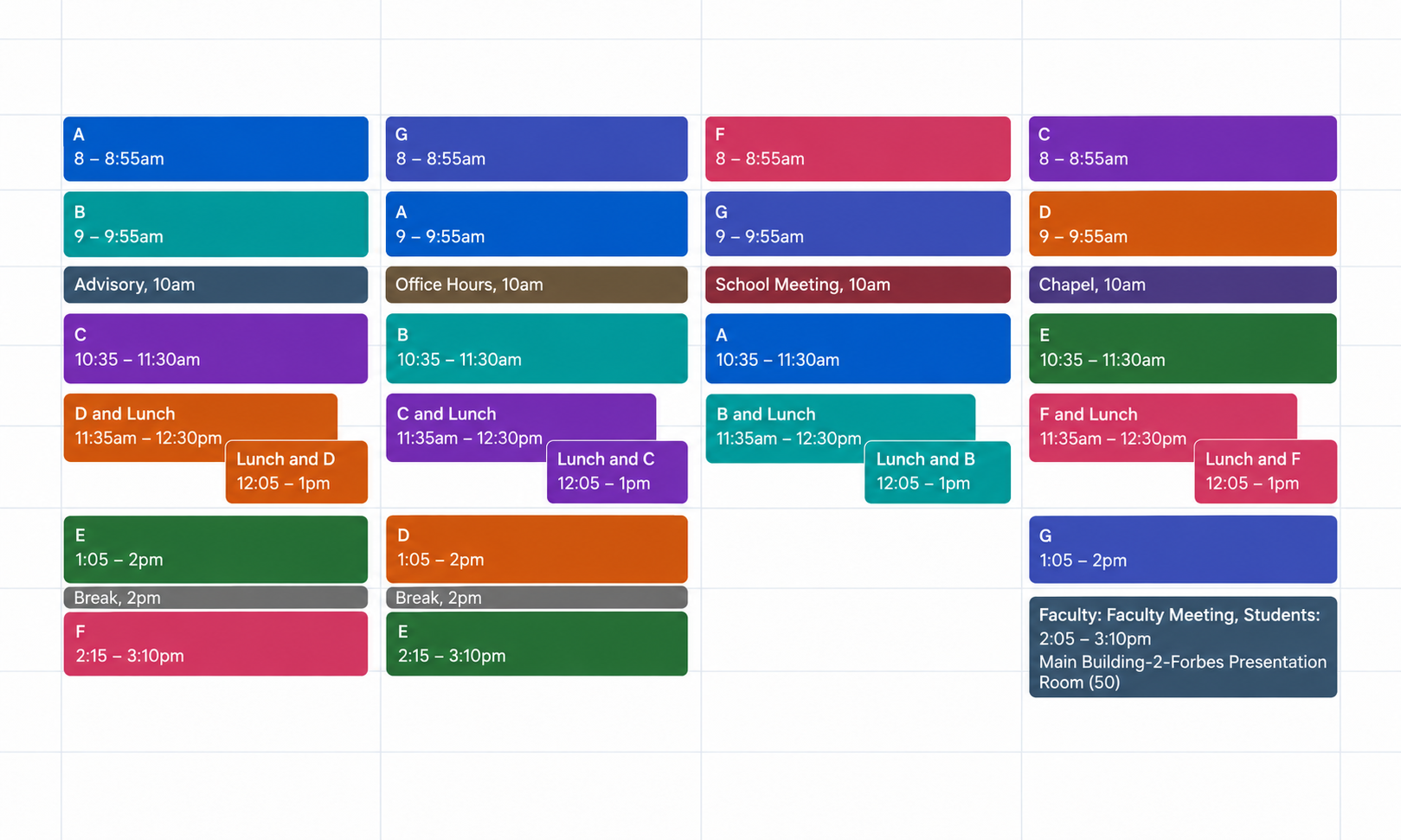
4 Day Week Schedule: Is Cramming 21 Classes in 4 Days the Best Way to Manage a Short Week

By Lauren Laskowsky ’29 and Jay O Park ’30
When the students of St. Mark's checked their calendars, many were shocked by the upcoming second week of school. In big and bold letters, a daunting 6-class Monday sat on their laptop screens, the beginning of a four-day week packed with 21 classes. This led students to wonder, “Why on Earth do we need to meet with our teachers 3 times in 4 days?”
September 7th, and the start of the second week of school, immediately plugged kids into the intensity of the shortened schedule. Six classes meant students had to move nonstop, and the additional homework was unending. Justin Yang, a 4th former, says, “I had almost four hours of homework every day.” For some, the schedule was so packed that there was barely enough time to eat lunch before moving on to the next commitment. The shortened lunch time, along with the incredibly long line to wait for your food, turned what normally would be one of the few breaks in the academic day into something students had to rush through.
The next day was like Monday all over again: six classes, back to back with what felt like no breathing room. The homework load showed no mercy, and neither did our sleep schedules. Ms. Plimpton, English department head and teacher, had shared some of her thoughts with us, and she said, “To launch the year with two back-to-back irregular weeks felt super disorienting. The four-day week drained me of all life force. I blame my cold on the whiplash!” She described the four-day week as draining and almost sucking the life out of her. We can attest that everyone else felt the same exact way, Ms. Plimpton.
By September 9th, it’s hump day. Everyone was trying to make it through the week on very little sleep, along with athletic games stacked on top of the heavy workload. A normal Wednesday schedule consists of three one-hour and five-minute classes; now it has four 55-minute classes. The four-day week schedule was like jumping on a treadmill moving 200 miles per hour, with no training at all. Your brain is moving faster than you physically can. Is meeting your teachers three separate times in four days really worth the sleepless nights and shoving two pieces of pizza in your mouth in under 5 minutes because you don’t have time to sit down? We think not.
On Thursday, it was the final stretch. The feeling that the hellish schedule is finally coming to an end. But no! A new activity has been implemented for Friday. Form day! When you finally think you’ll get some reprieve, you have to do form bonding with your grade for the entire next day. Come on, wouldn’t you be excited to make cardboard chariots with your classmates at 8 A.M. right after what it felt like being thrown in the wringer? It seemed to never end. Emily Tian ‘29 said, “I’m taking 7 classes this semester, and I can’t seem to take a break. I am going to sleep at the wee hours of the morning, and it’s only the second week of school.” She seemed like she’s going through it, and that was just a taste of it.
What does the Student Life Office have to say? The student body monitors are meeting with the Student Life Office on September 30th to explain themselves and what they can do. Will the monitors make a change? Will the students' voices be heard?

Phone Policy: Solution to Social Media Addiction or a Barrier in Student Life?

By Serena Lin ’28 and Nina Zhang ’29
A buzz of excitement, along with the never-ending chattering, ran down the hallways on the first day of the new school year; along with that, though, something was missing: the constant checking of phones. An email was sent out before the school year officially kicked off; an uproar of student dissatisfaction began, cell phones were no longer permitted on campus. Not for checking schedules, not for knowing the time, and not for looking out for emails.
You know that wide-eyed look you get when you’re new to a place and you can’t find anything? We usually see that look on new students trying to find their way around; however, this year, it appeared on every single person trying to find their friends after chapel or an all-school assembly. It was practically impossible, with every person in the school having a different place they needed to get to.
The first day was beyond chaotic, with lost students everywhere and people pulling out laptops in the middle of the hallways to check their schedules or where they were supposed to be headed. Yet, this phenomenon continued; students were often late to classes, without easy access to a clock or their schedules; we were like ships without rudders.
Student dissatisfaction grew. In past years, students were able to pull their phones out of their pockets and check special schedules. Under the restriction of the phone policy, students are not allowed to do this. Although there are reminders at events that tell students where to go, there has been inconvenience in passing them around. The phone policy also caused inconvenience in terms of academic learning. Previously, students were able to take photos of notes or do a quick revision on their phones before class. Now, this can only be done on laptops and iPads.
“I feel like the phone policy doesn’t change anything except that I cannot text my friends to find them,” said a student in response to the phone policy. The phone policy limits communication to in-person and excludes online texting.
Still, changes were noticed; people began to interact more with each other and talk to people they’ve never really acknowledged before. Voices began to increase in common spaces, and the laughter that accompanied Instagram reels no longer existed. In a world where digital communication and technology have already been engraved into our lives, this policy is forcing us to try something new. We, as a community, managed to engage much more during the academic day.
Though the phone policy appeared to be a pointless restriction to some students, it does prove to have a positive effect on other parts of the student community. In past years, when passing through the center, the hallway, and even the library, there were student yelling and laughing while scrolling through their TikTok. The digital connection cuts off in-person communication, as social media pulls away the attention of students. Pulling students away from the digital world forces students to focus on the real world, corresponding to the theme of this school year, “Listening to Learn, and Learning to Listen”. By extricating themselves from the digital world, students manage to focus and learn how to listen to others in the community.
Whether the phone policy is reasonable remains a live controversy in the student body. The pros and cons of this policy are both illustrative. Personally, the author thinks that the phone policy is effective in allowing students to focus more on the St. Mark’s community instead of being trapped in their own isolated digital world. However, at the end of only the second week since back-to-school, the long-term effects of the phone policy are still open to discussion. Will the phone policy make the community more interconnected? Or will it waste student vigor through its inconvenience? The outcomes are still unclear.