
Prize Day Issue
May 15 2026

Affinity Group at St. Mark’s
“We should celebrate and explore all of [the identities represented at St. Mark’s School],” said Teni. An affinity group is a group organized around a shared identity or common living experiences — race,…
By Zihan (Chelsea) Cao ’28
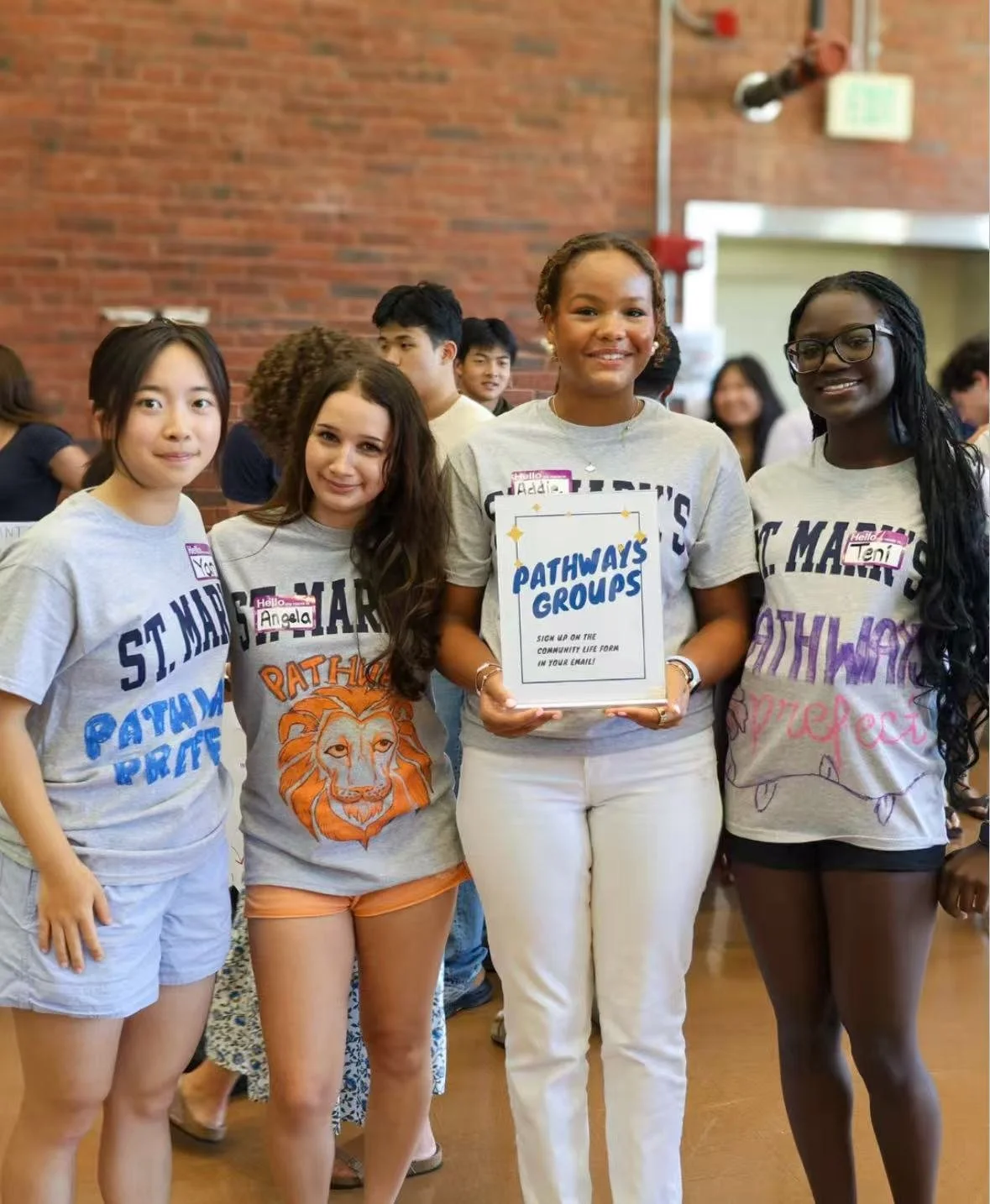
“We should celebrate and explore all of [the identities represented at St. Mark’s School],” said Teni. An affinity group is a group organized around a shared identity or common living experiences — race, ethnicity, gender, or religion. At St. Mark’s School, this includes cultural festival celebrations, student-organized workshops, and opportunities to perform.
Clubs and affinity groups serve as different parts of a student’s school life. A club brings students together around a passion, while affinity groups provide students a family-like niche. It emphasizes “mutual support”, gives students a peaceful place to discuss challenges, and maintains their traditions.
This year, at St. Mark’s school, we have 15 pathway groups.
Black Lions Union (BLU) supports Black students;
Pan African brings together African students;
Los Leones provides a space for Hispanic and Latinx students;
ASEA (Association of Southeast and East Asians) centers around Asian students;
South Asian Society (SASS) creates an environment for South Asians;
Asian American Society (AAS) supports Asian American students;
Men-are-Made and Southborough Society each support male and female identity, respectively;
Gender and Sexuality Alliance (GSA) focuses on experiences about gender and sex;
Christian Fellowship Group (CFG), J-Team, SMSara, and Openly Secular support students of Christian, Jewish, Buddhist, and secular beliefs, respectively;
Brilliant helps neurodiverse students;
Sisters of Color Affinity (SOCA) celebrates the identities of women of color.
Our pathway prefects this year, Oluteniola (Teni) Ogunjumo ‘27, Yan Cai ‘27, Adeline (Addie) Coleman ‘28, and Angela Pedulli ‘27, help to manage and organize all of these 15 groups. They know that these groups are especially significant in a boarding school environment. Away from home, students may have fewer environments to practice their traditions and speak to people from similar ethnic groups. Students in minority groups may find that some traditions in their lives seem to be unfamiliar to their classmates. The pathway prefects hope to emphasize the opportunities for students to share their experiences and traditions openly.
Throughout the academic year, we will have several key events celebrating different affinity groups. For example, at UMOJA, all of the affinity groups would get a chance to express themselves through their talents on stage to the students at St. Mark’s School. We will also hold the Culture Fair, where students can share food, stories, and traditions from their cultures.
Beyond the Dining Hall: Charlotte Han ’27 Rethinks Food Through Fellowship
Discussions of food at St. Mark’s are nuanced, encompassing physical spaces and what appears on the plate. From the dining hall’s transition to horizontally arranged tables to the introduction of a new…
By Feifei Cao ‘27
Discussions of food at St. Mark’s are nuanced, encompassing physical spaces and what appears on the plate. From the dining hall’s transition to horizontally arranged tables to the introduction of a new dining service and vending machines, the school’s food culture has continuously evolved. Even the informal exchange of candy and snacks in classrooms reflects the role food plays in everyday campus life. Yet Charlotte Han ‘27 thinks beyond the familiar conversations regarding sustenance, examining the intersection of food and the human body.
Awarded the Class of 1968 Vth Form Fellowship Grant last year, Charlotte has developed multiple projects that integrate nutritional education with her baking. Designated to support Vth Formers pursuing independent study through unconventional fields of inquiry and investigation, the grant has enabled her to translate her interests into entrepreneurial ventures. Charlotte’s self-authored and published cookbook, Market to Table, brings together recipes and practice guidance. Her project aims to make baking knowledge more accessible, encouraging readers to approach baking with creativity and nutritional awareness. Market to Table elevates nutrition as an active part of the cooking process and will soon be available in the library.
Market to Table is not Charlotte’s first venture supported by the fellowship. Working with the Matthews Grant, she built Grain & Loaf Co., translating her emphasis on ingredient quality and nutrition into a small bakery. The business has garnered support within the local Southborough community as well as the St. Mark’s community. Together, her two projects exemplify the ability of grants to support sustained inquiry, allowing students to transform their interests into projects with practical applications.
Charlotte's work identifies what she sees as a growing dichotomy between consumers and the food. She states that “throughout the U.S., the average person has grown to become less aware of the ingredients in their food and the impact those ingredients have on their health”. Through Grain & Loaf Co., she hopes to foster an appreciation for baking and nutrition within an increasingly commercialized food industry. Charlotte consistently challenges the perceived trade-off between nutritional value and taste.
Ultimately, Charlotte’s work illustrates the possibilities of the Class of 1968 Vth Form Grant. By pursuing her passions beyond traditional coursework, she has combined nutritional education with entrepreneurship, generating tangible products. Charlotte is working toward a culture in which understanding what we eat becomes as important as enjoying the food, developing a multifaceted response to a question that extends well beyond the dining hall.